What digital transformation actually means for a small business
Digital transformation means turning what you already do into information you can look up, check, and decide from. It is not buying software. It starts with the records you already keep: the notebook, the receipt photos, the supplier chat.
Updated
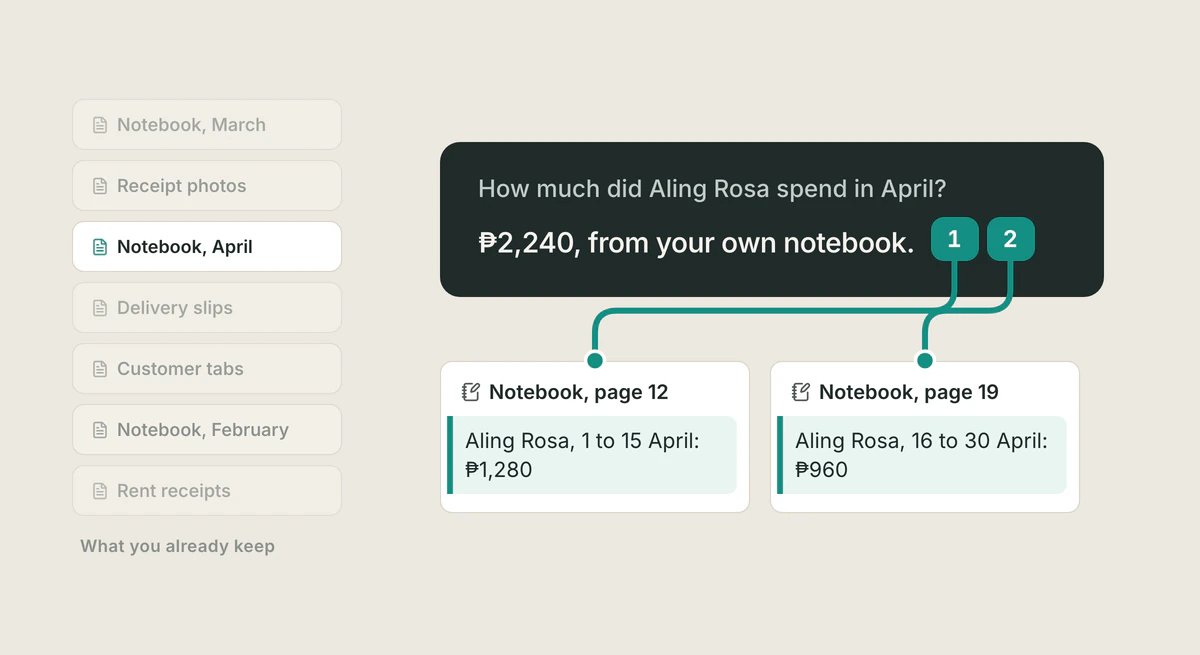
What is digital transformation for a small business like mine?
It is Sunday night. A customer messages you and asks how much she spent at your store last month. You know the answer is in your notebook, because you write down every sale. You start turning pages. You know the notebook is right. You also know you will be turning pages for a long time, and you may still miss a week.
That gap is what digital transformation means for a business your size. Your notebook holds the information. It is correct. It is simply hard to search. Transformation is the work of turning what you already do, page by page, receipt by receipt, chat by chat, into information you can look up, check, and decide from.
Notice what the definition does not say. It does not say buy an app. It does not say buy a computer. It does not say hire someone. Those can come later, and some never need to. The definition says your existing work becomes information you can use.
You are also not an edge case. The Philippine Statistics Authority and the Department of Trade and Industry counted 1,241,476 registered business establishments in the country, and 99.63% of them, which is 1,236,908, are micro, small, or medium enterprises. When people talk about digital transformation, they should mean the sari-sari store, the small eatery, the landlord with four units, the printing shop. Stores like yours, not offices in towers.
The payoff at the start is small and concrete. The customer's question takes seconds instead of twenty minutes of paging. That is the whole idea: questions you can answer, from records you already have.
Do I need to buy software or a new phone first?
No. Software is a tool that can help later. It is not the transformation. The transformation is the change in what your records can do for you: look up, check, decide.
Here is why the order matters. Software asks you to change your day around it. You have no spare afternoon, and no one to hand tasks to. If the first step is a new program that expects clean data and daily attention, the first step is usually where it stops. Not because you failed. Because the order was wrong.
Flip the order. Start with a question instead of a tool. If you know you want to answer how much did she spend last month, then any step that brings you closer to that answer is the right step. Sometimes that step is a photograph of a page. Sometimes it is a written total at the end of the week. The notebook stays. Nothing you trust gets thrown away.
When software does arrive, it arrives for a reason you chose. It answers one of your written questions. Then it earns its place, and you can judge it by something real: did it answer the question.
What counts as records when everything is scattered?
More than you think. The notebook is a record. The receipt photos filling your camera roll are records. The chat thread where your supplier confirms prices is a record. The folder with your contracts is a record. So is the list in your head of who still has utang with you.
Scattered is the normal state, not a personal flaw. In a 2022 survey of 400 Philippine MSMEs commissioned by the Department of Trade and Industry, 23% used no digital tools for business at all, and 51% used only basic tools such as email and word processing. Most businesses like yours keep records the way you keep them: real, but spread out.
What makes something a record is simple. If it answers a question about your business, it is a record. A photo of a delivery slip answers what arrived on Tuesday. A chat message answers what price we agreed on. A page in your notebook answers who owes what.
The scattered part is what transformation works on. Not the keeping. The finding. You already record almost everything you need. The missing piece is being able to find it when a question shows up.
What can I actually decide once I can look things up?
The questions get practical fast. How much does my regular customer spend in a month? Which items run out first, every single time? How much utang is unpaid, and how old is it? Did all four units pay rent this month, or is one late? For a printing shop: which jobs take the longest, and which customers come back?
Each question leads to a decision. If she spent a certain amount last month, you can set aside the stock she always buys. If an item runs out every week, you know to order more of it, sooner. If a unit pays late every month, you can plan around it. This is what decide from means. Not a dashboard. A next action.
You do not need every question answered at once. One answer, used this week, changes how the week goes. Then another. Businesses that do this well did not do it in one afternoon. They answered one question at a time, and the answers stacked.
Size does not decide who can do this. Micro-enterprises adopt advanced digital tools the least of any size band, 19% of micro-enterprises versus 25% of small firms and 21% of medium firms, according to a 2024 OECD survey. That number describes tools, not ability. You do not need advanced tools to answer one question about your own store. You need the question, and the record that holds the answer.
What can I do right now, with paper only?
You start with the one skill this chapter leaves you with: writing down a question about your business that you cannot answer today. Not a goal. Not a plan. A question. The question comes first because every useful step after it answers something you actually asked.
Here is the drill. It takes ten minutes. You need paper and a pen. That is all.
1. Take one sheet of paper and write at the top: Questions I cannot answer today. 2. Write three questions about your business you cannot answer today. Real ones. How much did my Sunday customer spend last month. How much utang is unpaid right now. Which stock runs out first. 3. Read the three questions and circle the one that would help you most this month. Not the biggest one. The most useful one. 4. Keep the paper where you keep the notebook.
That circled question is the work, started. It tells you what to look for when you open the notebook next, what photo might be worth taking, what total might be worth writing at the end of the week. You do not need an afternoon. The question fits in the gaps your day already has.
The next time someone asks you one of those questions, you will know exactly what you are looking for. That is the difference between records that sit and information you can use. The paper stays. The notebook stays. Now they are aimed at something.
FAQ
- Do I need to buy software to start?
- No. The first step is a question written on paper. Software becomes useful later, when it can answer a question you already wrote down.
- Should I replace my paper notebook?
- No. Your notebook works, and what it holds is correct. The goal is to make what is in it easier to find, not to throw away what already serves you.
- What if my records are messy or incomplete?
- That is normal, and it does not block you. Start with the question first. The answer tells you which records matter, and those are the ones worth keeping more completely.
- How is paper part of digital transformation?
- Transformation is the direction, not the device. Today a page answers by hand. Tomorrow a photo of the same page can be found on your phone. Later, tools can read the photo for you, though you always check their work, because no tool is right every time.
- What question should I write first?
- The one someone already asked you and you could not answer, or the one about money you think about most: sales, utang, stock, rent. Write three, then circle the one that would help most this month.
Sources
Related guides
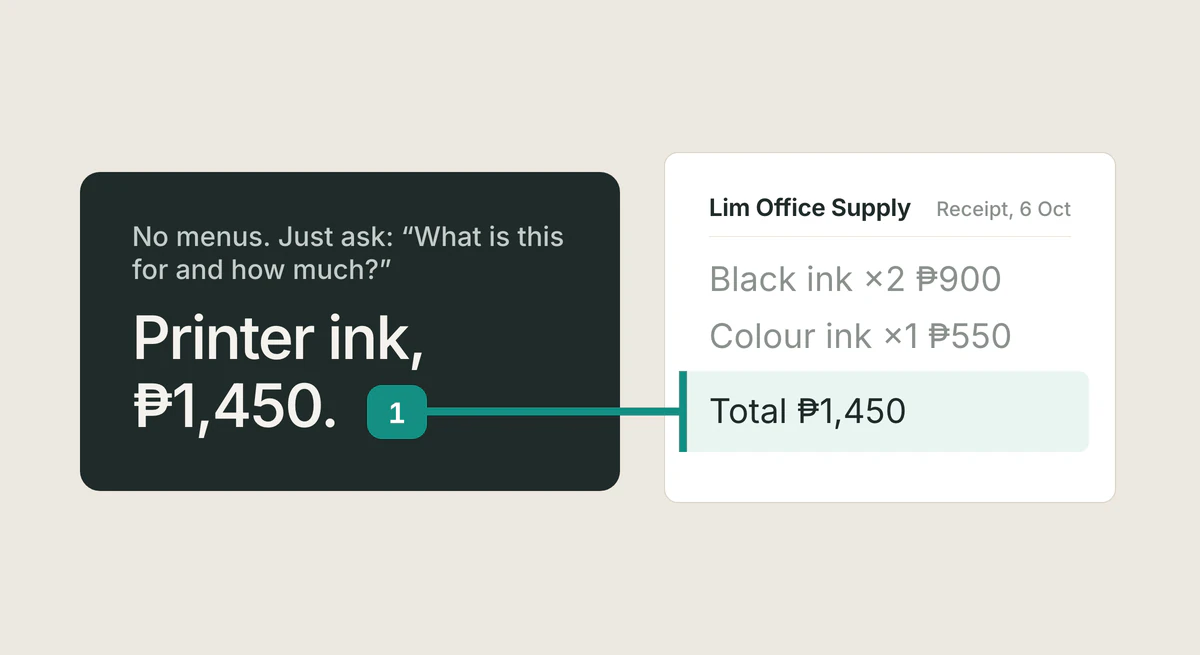
Plain language is the interface
Type what you want in ordinary words and the software does the rest. What changed, why beginners gain the most, and a ten minute drill with one receipt.
Read the article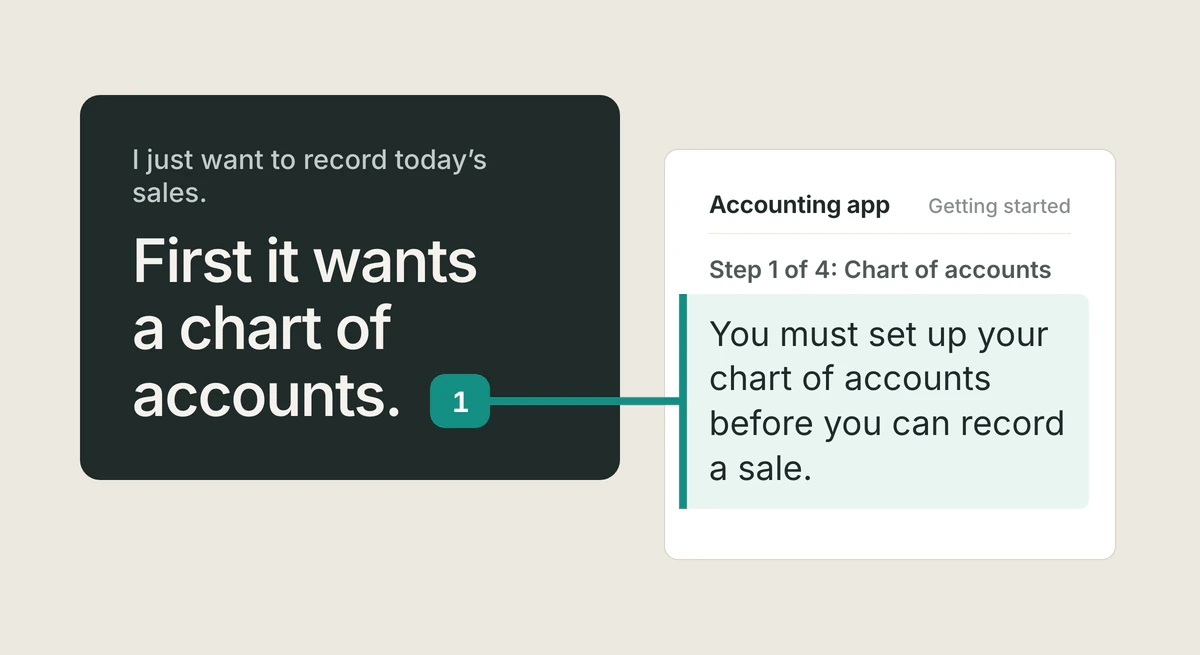
The software entry fee
For thirty years, business software charged an entry fee: learn its system first. The 70 percent failure number is not real. It was never you.
Read the article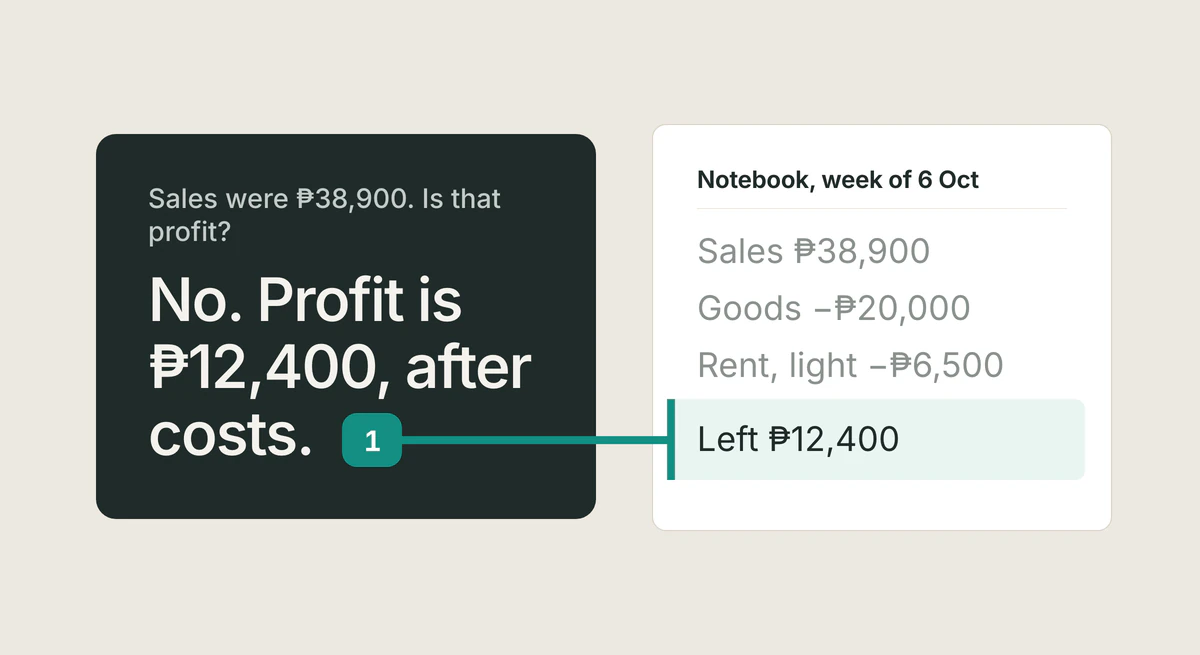
Is your business making money?
Sales are not profit, and money in the drawer is not either. One rule of thumb, worked through with real numbers, for owners who keep their records in a notebook.
Read the article