Topic
Retrieval-Augmented Generation, in Practice
Retrieval-augmented generation finds the relevant passages in your own material and gives them to the model with your question, so the answer is grounded in your documents rather than in whatever the model absorbed during training. These guides cover how that pipeline works and where it fits against the alternatives.
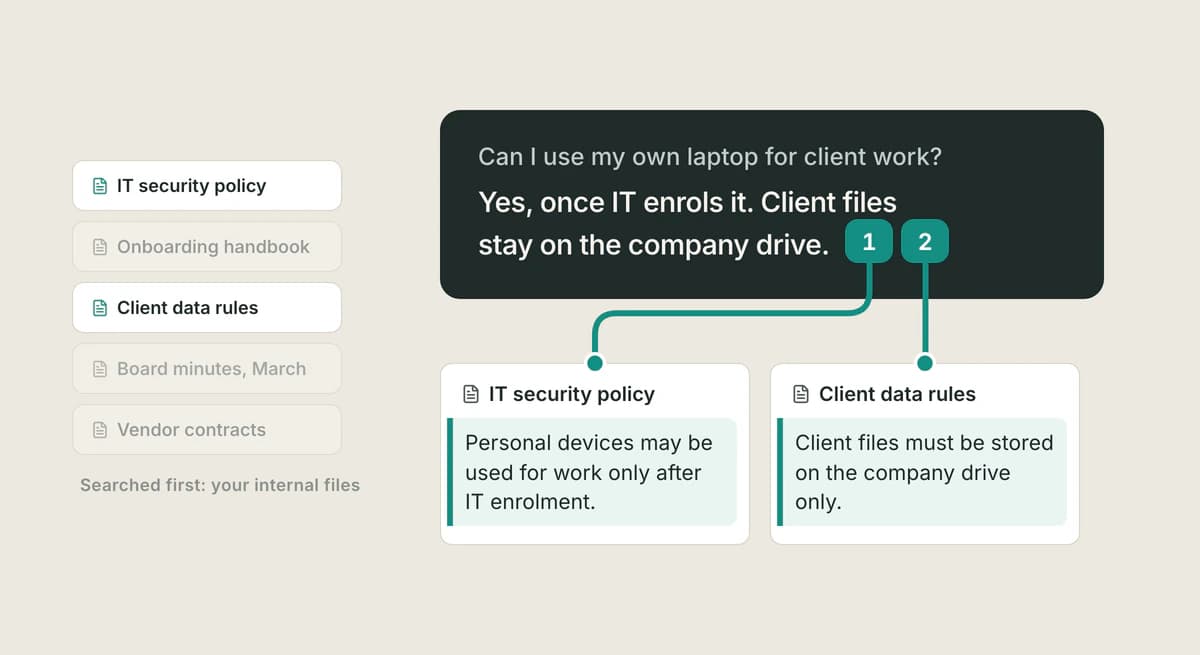
Private RAG Guide
RAG (retrieval-augmented generation) lets AI search your internal documents and answer with citations to the exact source. Learn how private RAG and verification work.
Read the article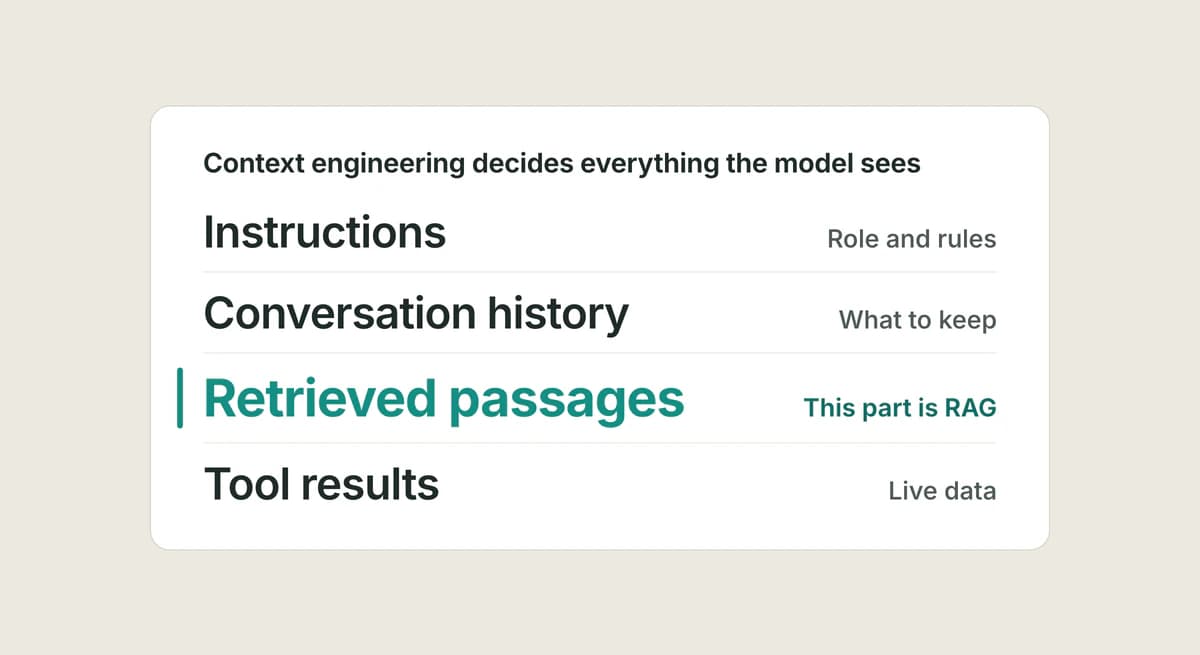
Context engineering vs. RAG
Context engineering is the practice of curating everything an AI sees at answer time; RAG is one technique within it. Here is how they relate and when each matters.
Read the article
Give AI the right context
Each new chat starts blank, so you paste the same background again. Keep your documents in one place, ask once, and open the line the answer came from.
Read the article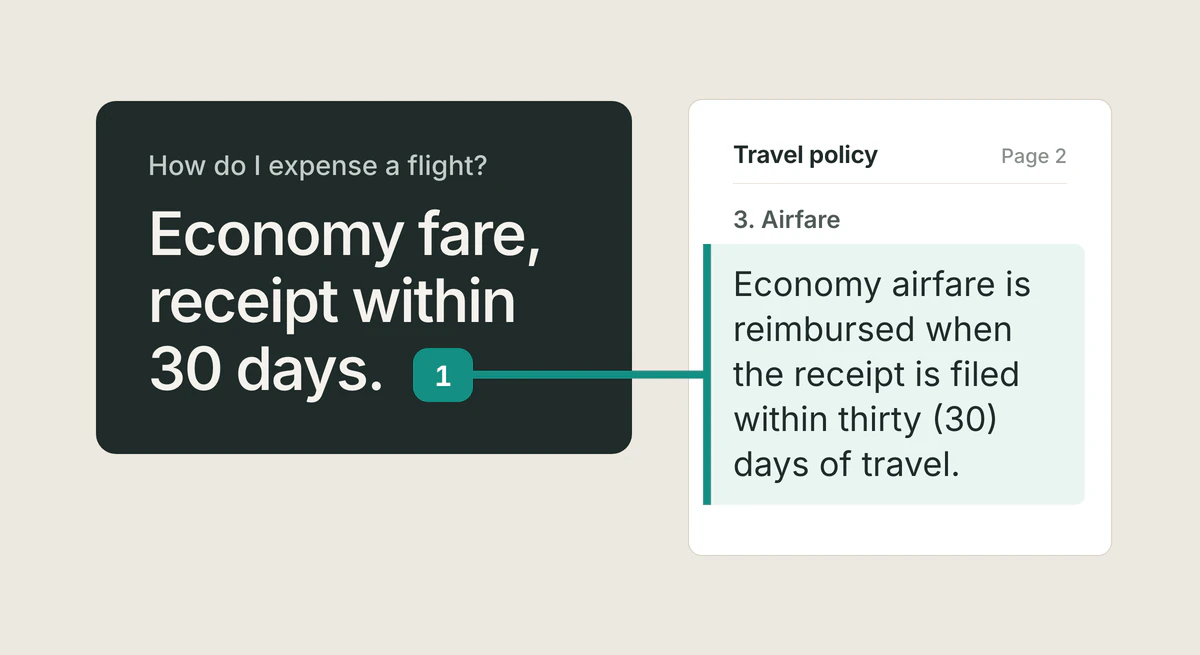
AI knowledge base
An AI knowledge base turns your documents into plain-language, cited answers using semantic search and RAG. Learn how it works and what makes one trustworthy.
Read the article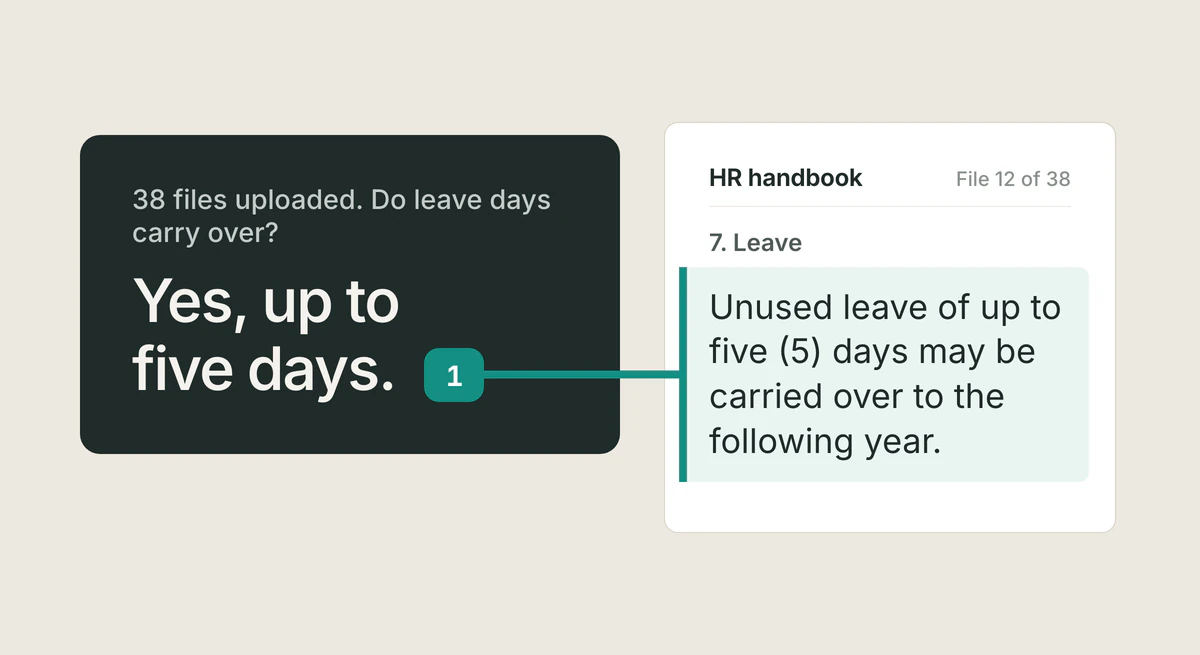
Knowledge base from documents
A step-by-step guide to turning a folder of documents into an AI knowledge base: gather, upload, ask, and verify. No tagging, schema, or code required.
Read the article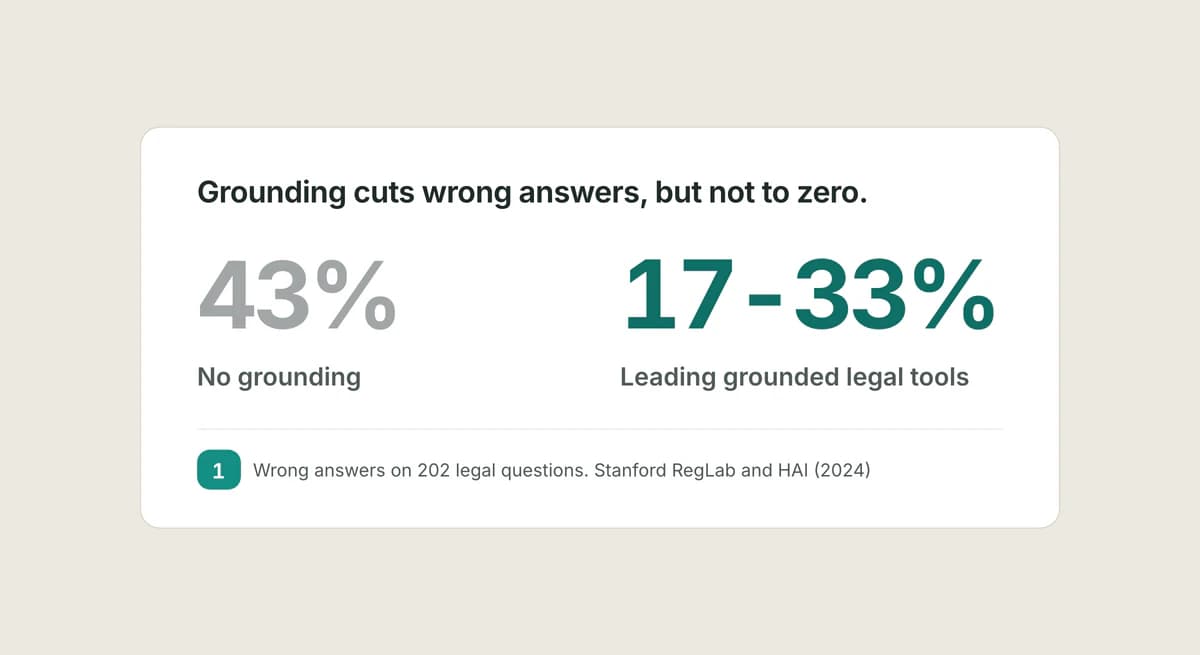
RAG hallucination rates
Retrieval-augmented generation cuts AI hallucinations sharply but does not eliminate them: Stanford measured 17-33% for leading legal RAG tools versus 43% for GPT-4. The numbers, and how to design around the residual.
Read the article