Why does AI keep forgetting your context, and how do you fix it?
AI keeps forgetting your context because each new chat starts from a blank slate and can only "see" what fits inside its context window, the limited amount of text it holds at once. It has no built-in memory of your documents, your last conversation, or your situation. You fix this not by writing ever-longer prompts, but by giving the AI persistent, retrievable context from your own files and having it cite the exact source for every answer. This guide walks through why the forgetting happens, why the usual workarounds fall short, and what a durable fix actually looks like.
Updated

Ever feel like you're re-explaining yourself to AI?
You open a chatbot on Monday and paste in the same background you pasted last Tuesday: who the client is, what the project covers, which rules apply. You get a good answer. The next day, it remembers none of it, and you do it all again. If that loop feels familiar, you are not doing anything wrong, you are running into a basic limit of how these tools work.
The frustration is real because the work is real. People doing serious work, in law, research, finance, operations, are not playing with a toy; they need the AI to know their context and keep knowing it. When it forgets, the tool quietly shifts the burden back onto you: you become the AI's memory, re-feeding the same context over and over. That is the problem worth fixing.
Good context dramatically reduces errors but doesn't eliminate them: even retrieval-grounded legal-AI tools still hallucinated 17–34% of the time in a Stanford study. That is the case for giving AI the right source material and keeping every claim traceable back to it.
Why AI forgets: the context window in plain terms
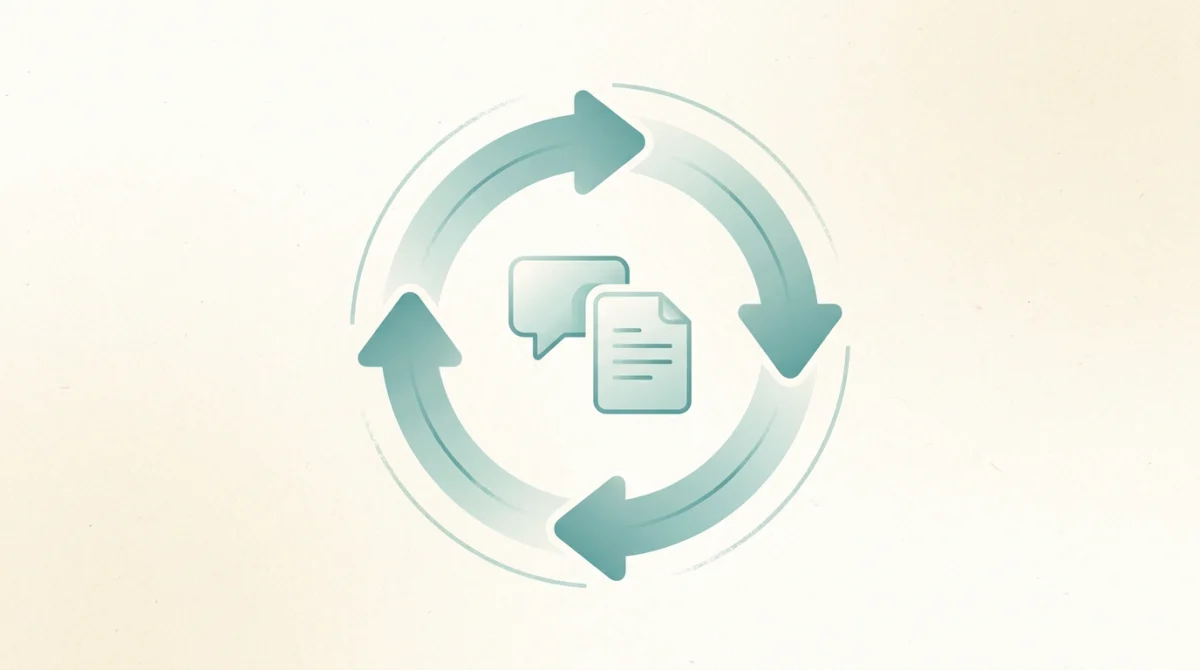
An AI model has no memory between sessions. Everything it knows about your specific situation has to be placed in front of it each time, inside what is called the context window, the maximum amount of text it can consider at once, measured in tokens (a token is roughly three-quarters of a word). Your prompt, any documents you paste, the conversation so far, and the answer it writes all share that one budget.
So "forgetting" is not a bug; it is the default. When a new chat starts, the window is empty. When you exceed the window, older content falls out of view. The model is not being forgetful in a human sense, it simply never had your context stored anywhere, and what you did give it does not persist. Hold onto this idea: the question is not how big the window is, but where your context lives and how it gets in front of the model when it matters.
Bigger prompts and fine-tuning don't really fix it
The obvious reactions each hit a wall. Writing longer and longer prompts just fills the window faster, and you are still re-pasting everything by hand every session, the toil never goes away. Fine-tuning a model on your data is expensive, slow to update, and bakes knowledge into weights you cannot inspect or cite, so it goes stale and you still cannot verify where an answer came from.
Keeping a giant running chat seems to help until the early context silently scrolls out of the window and the model starts contradicting things it "knew" an hour ago. None of these gives you what you actually want: context that persists, stays current, and can be checked. They move the pain around rather than removing it.
The fix that works: retrieval and citations
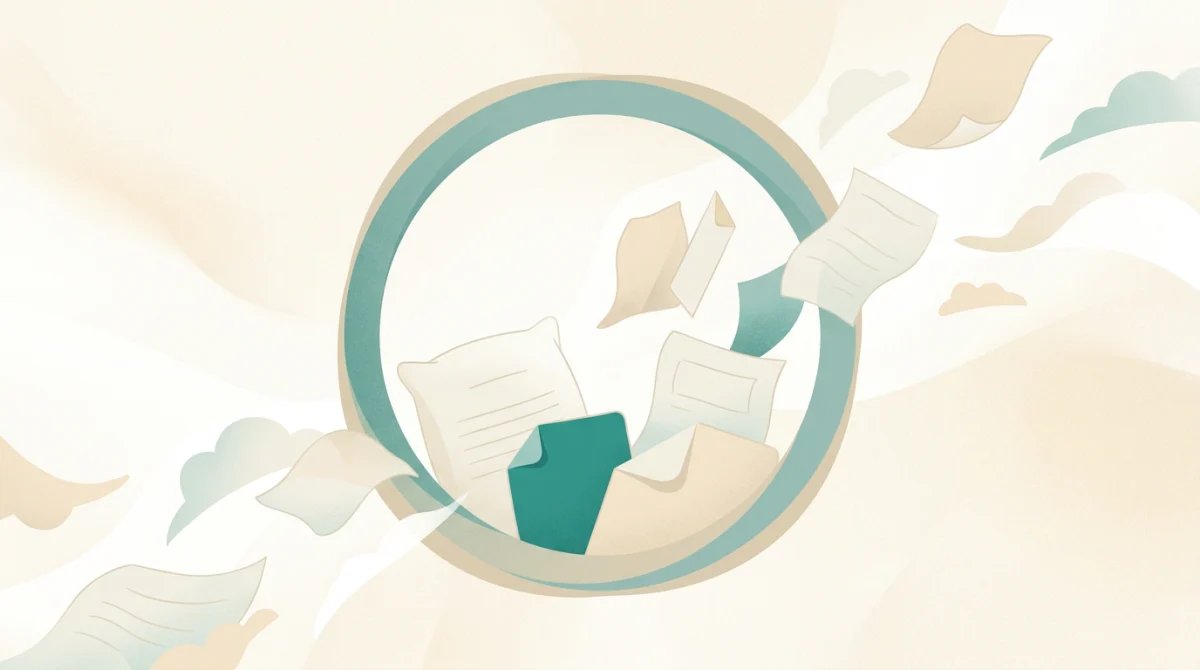
The durable fix is to keep your context outside the model, in a library of your own documents, and retrieve only the relevant passages for each question. This is called retrieval-augmented generation, or RAG. Instead of stuffing everything into the window, the tool searches your files, pulls in the few passages that matter for the question at hand, and lets the model answer from those. Your effective knowledge can be enormous, far larger than any window, because it lives in the library and only the relevant slice is loaded each time.
Retrieval also makes answers checkable, which is the part that matters most for real work. Because the model worked from specific retrieved passages, a well-built tool can cite each one, so you can open the exact source and confirm the answer rather than trust it. Persistent context plus citation is the combination that finally ends the re-explaining loop.
What it feels like when AI finally has your context
The day-to-day difference is quiet but large. You stop preparing the AI and start just asking it. The background it needs is already there, drawn from your own library, so a question like "what did we agree on renewal terms across these contracts" returns a direct answer with the exact clause cited, and you verify it in seconds instead of re-reading twelve files. You are no longer the AI's memory.
This is the experience Tatsulok is built for. You keep your documents in a private library, ask questions in plain language, and every answer is cited to the exact source passage, shown as a highlighted preview with a link to the original. Your context persists across sessions and surfaces, your documents and prompts are never used to train any AI model and are encrypted in transit and at rest, and you control who can see what. The AI finally knows your context, and you can prove every answer it gives.
FAQ
- Why does AI like ChatGPT forget what I told it earlier?
- Because models have no memory between sessions and can only consider what fits in their context window at the moment they answer. A new chat starts empty, and once a conversation exceeds the window, earlier content falls out of view. Your context is not stored anywhere unless a tool deliberately keeps and retrieves it.
- Can't I just use a model with a bigger context window?
- A larger window helps but does not fix the root problem. Everything still shares one budget, very large contexts are slower and costlier, and you are still re-supplying your context every session by hand. Keeping context in a retrievable library scales far better than trying to fit everything into the window.
- Is fine-tuning a model on my documents the answer?
- Usually not. Fine-tuning is expensive, slow to update so it goes stale, and bakes knowledge into weights you cannot inspect or cite. Retrieval keeps your documents as the live, checkable source and lets answers cite the exact passage, which fine-tuning cannot.
- What is RAG, briefly?
- RAG (retrieval-augmented generation) means the AI searches a body of documents for the passages relevant to your question and answers from those, instead of relying only on what it was trained on. It is how you give a model persistent, current, citable context from your own files.
- How do I keep my documents private while doing this?
- Use a tool that is private by design. With Tatsulok, your documents and prompts are never used to train any AI model, are encrypted in transit and at rest, and stay private by default with access you control per person and per team.
Sources
Related guides
Context rot
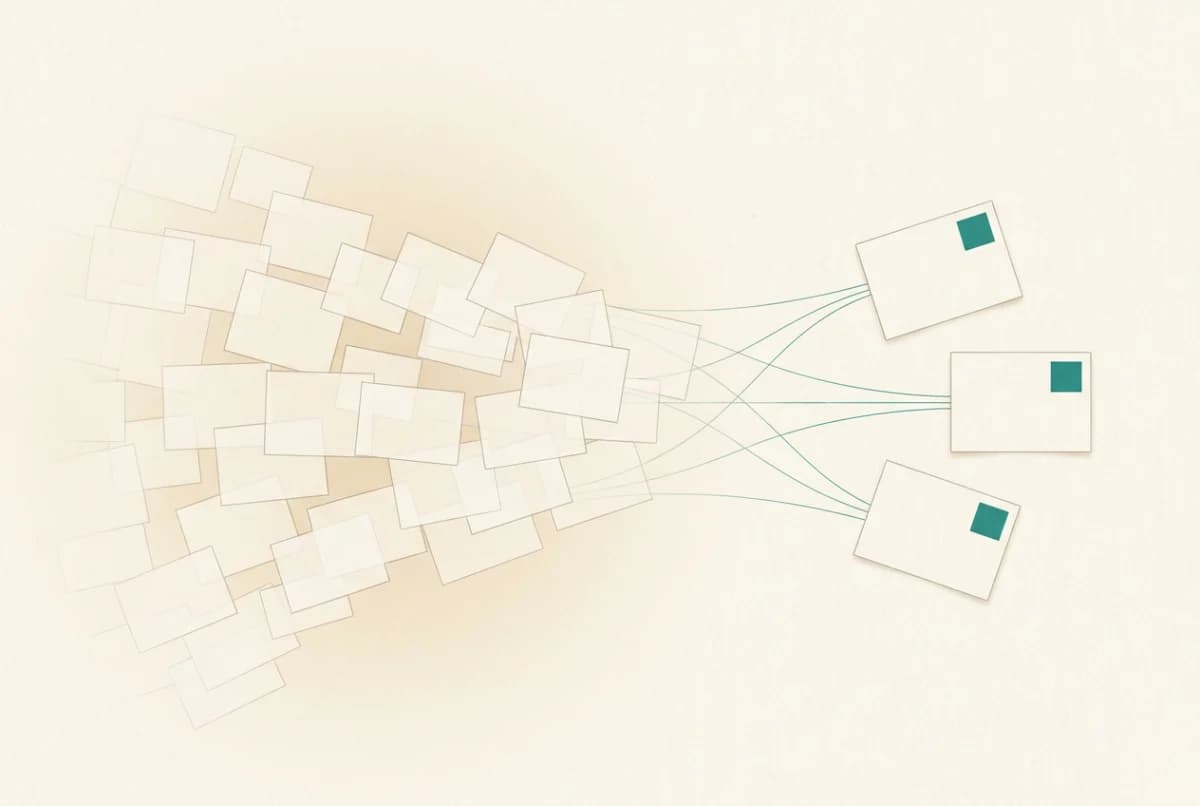
Context rot is the accuracy drop language models suffer as input grows, long before the window fills. At 32,000 tokens, 11 of 13 models scored under half.
Read the article
AI context window
An AI context window is the maximum amount of text, measured in tokens, a model can consider at once. Here is what it means for working with long documents.
Read the article
Context engineering vs. RAG
Context engineering is the practice of curating everything an AI sees at answer time; RAG is one technique within it. Here is how they relate and when each matters.
Read the article