Are Google AI Overviews accurate? What those citations do not prove
Google's AI Overviews are usually right about the question you asked and frequently unsupported by the sources they show you, and those are two different things. In Oumi's 2026 study of Gemini 3 powered Overviews, about 91% contained the correct answer, but only 39% were both correct and fully supported by their cited sources. Measured claim by claim, 67% were supported, meaning roughly one claim in three was not backed by the citation sitting right next to it. The skill this teaches is small and permanent: a citation is a pointer, not a proof. This post explains the gap and gives you the 20-second check that closes it.
Updated
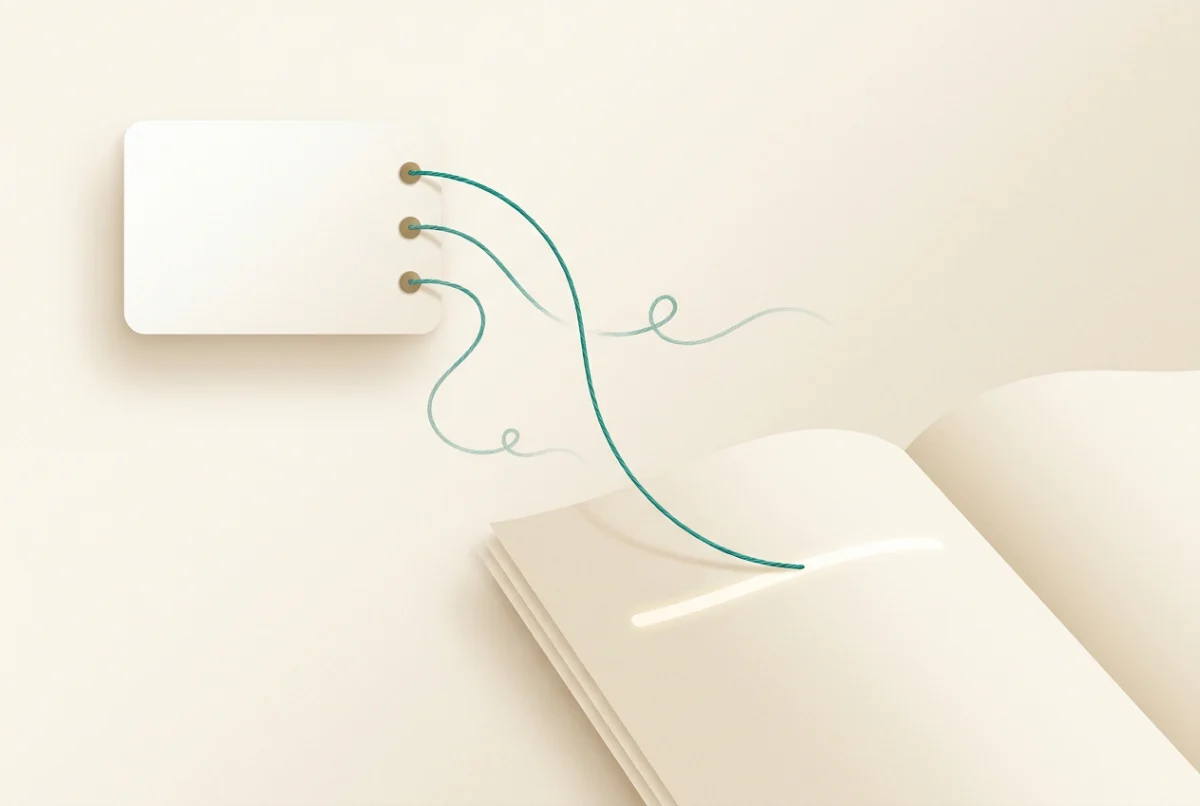
The box at the top that feels already checked
You search something, and before the blue links there is a tidy paragraph answering you directly, with source links attached to the side. The presence of those links does real psychological work. Someone showed their sources, so the answer reads as sourced, and most of us move on.
That feeling is the thing worth examining. The links tell you which pages the system consulted. They do not tell you that the sentence in front of you is what those pages actually say. Between consulting a source and being supported by it lies a gap that no interface currently shows you, and the research says that gap is not small.
What the 2026 study measured
Oumi ran SimpleQA benchmark queries through live AI Overviews, scraped both the Overview text and the exact text fragments of each citation, and then scored two separate things: whether the answer was correct, and whether every claim in it was supported by the cited sources.
The split is the finding. About 91% of Gemini 3 powered Overviews contained the correct answer. Only 39% were what the researchers call trustworthy, meaning correct and fully supported. Aggregated by individual claim rather than by query, 67% of claims were supported, so about a third were not traceable to the sources shown. The most uncomfortable comparison came from putting Gemini 3 next to the Gemini 2 era: accuracy went up, and the hallucination rate went up too. Newer and more accurate did not mean better grounded.
How to read this study honestly
We hold our own citations to the standard this blog preaches, so here is the study's shape, including its soft spots. The judging was done by models, GPT-4 for accuracy and a purpose-built claim-verification model for support, with a human certifying a sample of 25 (0% false positives, about 3% false negatives) so the error bars could be estimated rather than assumed. The queries came from SimpleQA, a benchmark built by OpenAI. A Google spokesperson disputed exactly that choice, arguing SimpleQA is not representative of real user queries and carries errors in its own ground truth, and preferring a Google-built alternative. The researchers left that judgment to the reader, noting the awkwardness of evaluating Google's product on Google's dataset.
So treat the precise numbers as one careful measurement rather than a settled constant. What survives the dispute is the shape: a large, repeatedly observed gap between answers being right and answers being supported by what they cite. That gap is what your habit has to cover.
A citation is a pointer, not a proof
This is the transferable idea, and it applies far beyond Google. A citation makes three claims that get quietly bundled together: this source exists, this source is relevant, and this source says what I just said. Automated systems are reliable at the first, decent at the second, and unreliable at the third. Your eyes are the only thing that verifies the third.
Hence the check, which takes about twenty seconds. Pick the one claim in the answer that your decision actually rests on. Open its citation. Read the specific passage, not the page, and ask whether it states that claim, implies it, or merely sits near the topic. Most failures are the third case, a real source about roughly the right subject that never makes the specific assertion attributed to it. You are not auditing the whole answer, you are testing the load-bearing beam.
Why we built the check into the product
The reason this check feels expensive on the open web is that the interface fights you. You get a page link, not a passage, so verifying one sentence means skimming an article to find the part that might support it. Multiply by a working day and nobody does it.
That friction is a design choice, and it can be made differently. In Tatsulok, answers come only from your own documents, and every claim links to the exact passage it rests on, so checking is a click that lands you on the sentence rather than the article. When the sources are silent, the answer says so instead of reaching for something plausible. The point is not that you should trust us more; it is that the twenty-second check should cost you two seconds.
This week's drill, no signup needed. The next AI Overview you see, take the single claim you would repeat to someone else, open its citation, and find the sentence that supports it. Note whether you found it, could not find it, or found something close but not quite the same. Do this three times and you will have a personal, honest calibration for how much that tidy box at the top is worth.
FAQ
- Are Google AI Overviews accurate?
- Usually accurate on the question asked, but often not supported by their own citations. Oumi's 2026 study found about 91% of Gemini 3 powered Overviews contained the correct answer, while only 39% were both correct and fully supported by the sources they cited.
- Do AI Overview citations prove the answer is right?
- No. A citation shows the system consulted that page; it does not show the page supports the specific sentence. In the same study, 67% of individual claims were supported by the cited sources, meaning roughly one in three was not.
- Did newer Gemini models make AI Overviews more reliable?
- More accurate, not better grounded. Comparing the Gemini 2 era with Gemini 3 on the same queries, the researchers found accuracy rose while the hallucination rate also rose, so trustworthiness did not improve with capability.
- Is the AI Overviews study reliable?
- It is one careful measurement with known limits. Judging was done by models with a human-certified sample (0% false positives, about 3% false negatives on 25 items), and Google disputed the use of the SimpleQA benchmark as unrepresentative of real queries. The specific percentages are contestable; the gap between correct and supported is the durable finding.
- How do I quickly check an AI Overview claim?
- Pick the one claim your decision rests on, open its citation, and read the specific passage rather than the page. Ask whether it states the claim, implies it, or is merely topically nearby. The third case is the most common failure and takes about twenty seconds to catch.
Sources
- Oumi: study of AI Overviews trustworthiness (91% correct, 39% trustworthy, 67% of claims supported)
- Search Engine Land: analysis of AI Overviews accuracy findings and Google's response
- Tatsulok guide: how AI answer engines decide what to cite
- Tatsulok guide: can AI fact-check AI, and why the blind spots are shared
Related guides
Verify AI answers
To verify an AI answer, demand a citation to the exact source passage and check the highlighted text against the original document. Here is how.
Read the article
How AI engines cite
Princeton researchers measured what makes AI engines cite a source: citations, statistics, and quotations boosted visibility up to 40%. What that means for trusting AI answers, and for being cited yourself.
Read the article
AI hallucinations
AI hallucinations are confident but false AI answers. Learn why they happen, what they cost in the real world, and how cited answers help you catch them.
Read the article