How AI answer engines decide what to cite, and why you should care twice
AI answer engines cite sources that are easy to extract and look authoritative: Princeton's GEO study measured that adding citations, quotations, and statistics to a page boosted its visibility in AI answers by up to 40%. That finding matters to you twice. As a reader, it means the sources inside an AI answer were chosen for extractability, not verified truth. As someone whose work should be found, it means the same clarity that helps humans trust you is now how machines decide to quote you.
Updated
The answer that quoted your competitor
You ask an AI assistant a question squarely inside your expertise, and the answer arrives citing three sources. One is a content farm, one is a five-year-old blog post, and one is your competitor. The page you spent weeks making rigorous is nowhere.
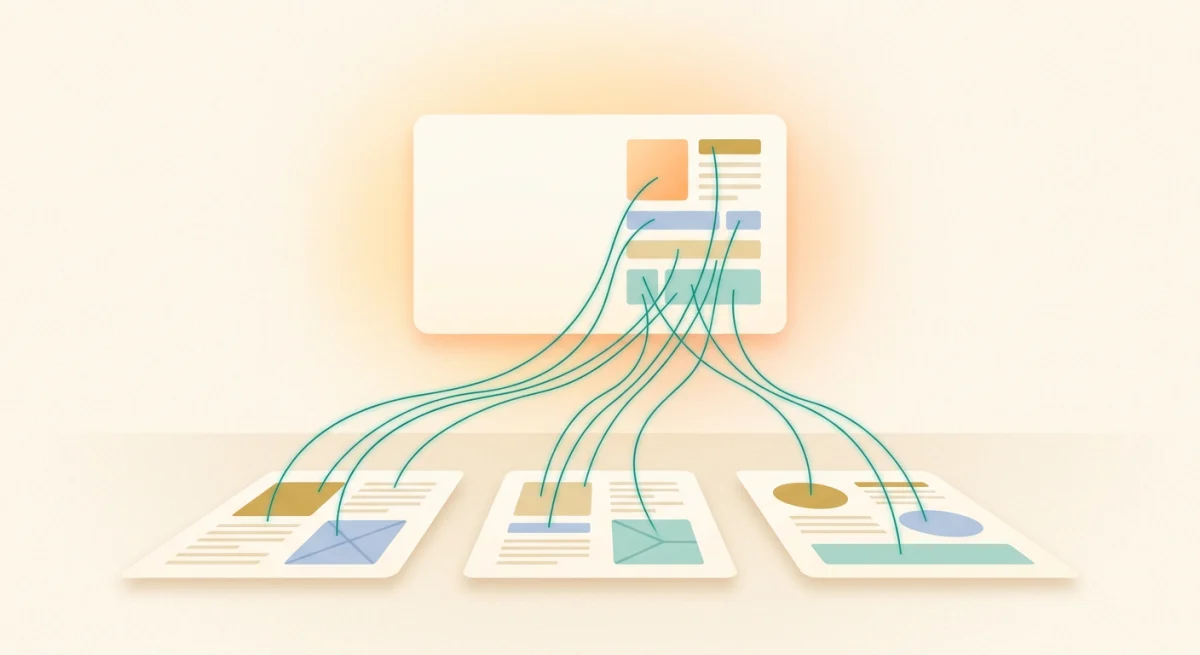
The engine did not judge your competitor more correct. It never judged correctness at all. It retrieved candidate pages, extracted the passages that were easiest to lift and looked most like evidence, and assembled an answer. Understanding that mechanism changes how you read AI answers, and it changes how you write anything you want AI to find.
What the Princeton study actually measured
The GEO study from Princeton and collaborators ran a clean experiment: take real pages, apply one writing change at a time, and measure how often generative engines surfaced them in answers. Adding citations to sources, adding quotations, and adding statistics each boosted visibility substantially, in the range of 30 to 40% on their benchmark. Keyword stuffing, the old SEO reflex, made things slightly worse.
Read the list again and notice what it is: the markers of evidence. Engines quote pages that look like they have already done the work of proving things. Looking like evidence and being evidence are correlated, but they are not the same thing, and the gap between them is where a reader's judgment still earns its keep.
For readers: the citations were selected, not vetted
This mechanism is why an AI answer's sources deserve the same check as its claims. The engine rewarded extractability: clear structure, quotable sentences, visible numbers. A content farm that formats well can outrank a rigorous paper that does not. Columbia's Tow Center measured the result from the output side: even the best engine cited sources incorrectly 37% of the time.
So when you open a citation, you are not just checking whether the passage supports the claim. You are also asking the question the engine never asked: is this source worth believing at all? Who wrote it, on what evidence, with what incentive. Two layers, one habit.
For your own work: write like evidence, honestly
The same findings are a fair playbook for being found. State the answer plainly near the top, because extraction favors pages that commit. Attach real statistics with their sources. Quote authorities accurately. Structure claims so each one stands on its own line with its evidence beside it.
Notice that every item on that list also just makes your work more trustworthy to humans. That is the honest version of GEO: the machines reward the surface features of rigor, and the durable strategy is to have the rigor underneath, because the audits that expose hollow sources are getting better every year. Write pages where the extraction and the truth are the same thing.
Why this page practices what it preaches
You may have noticed this post does the things it describes: an answer-first opening, named studies with links, specific numbers with their caveats. Every post on this blog does, and every answer inside Tatsulok goes further: assembled only from your documents, with each sentence linked to the exact passage behind it, and an honest gap statement when the sources are silent.
That is our position in this ecosystem: the engines choose what looks like evidence, so we build the place where looking like evidence and being evidence are forced to coincide.
This week's drill, no signup needed: ask any AI assistant a question in your field and open every source it cites. Rate each one: would you have cited this? Count how many pass. That number is your calibration for how much the phrase "according to sources" should mean to you.
FAQ
- How do AI engines pick which sources to cite?
- By retrieval and extractability, not verified correctness: they surface pages whose passages are easy to lift and look like evidence. Princeton's GEO study measured that adding citations, quotations, and statistics boosted a page's visibility in AI answers by up to 40%.
- Does being cited by ChatGPT or Perplexity mean a source is reliable?
- No. The engine optimized for extractable, evidence-shaped text, and the Tow Center audit found even the best engine citing sources incorrectly 37% of the time. Treat cited sources as candidates to evaluate, not endorsements.
- How do I make my content citable by AI engines?
- State the answer plainly at the top, include real statistics with sources, quote authorities accurately, and structure claims one per line with evidence attached. Avoid keyword stuffing, which the GEO study measured as slightly harmful.
- Is GEO different from SEO?
- Generative engine optimization targets being cited inside AI answers rather than ranked in link lists. The levers differ: evidence markers and extractable structure matter more, keyword density matters less, and the honest overlap is that genuine rigor now serves both.
- What should I check when an AI answer cites sources?
- Two layers: does the cited passage actually support the claim (the 90-second check), and is the source itself worth believing: author, evidence, incentive. The engine performed neither check; both are yours.
Sources
Related guides
AI mistakes at work
KPMG's global study found 57% of employees have made mistakes because of AI, and 58% rely on AI output without checking it. The two-habit fix that protects your work and your name.
Read the article
The 90-second answer check
How to verify an AI answer in 90 seconds: open the source, compare the claim to the passage, and note what it does not prove. A ritual you can build into a habit, with a practice drill.
Read the article
When AI says I don't know
An AI that admits the evidence is not there is protecting you, not failing you. How to tell an honest gap from a broken refusal, and how to turn "insufficient information" into a better question.
Read the article