Before you forward it: the 90-second AI answer check
To verify an AI answer in 90 seconds, do three things: open the source it cites, compare the claim against the actual passage, and note what the passage does not prove. That is the whole ritual. It sounds almost too small to matter, and it is the difference between the person who forwards a confident mistake and the person everyone learns to trust with AI. This post teaches the ritual so it becomes a habit you carry into every AI tool you use.
Updated
The moment this is for
It is late, the memo is due in the morning, and the AI just handed you a paragraph that sounds exactly right. There is a small voice asking whether you should check it, and a louder voice saying it reads fine and you are tired.
Everyone who works with AI knows that moment. The forwarded answer that turns out to be wrong does not fail loudly at your desk; it fails later, in front of your boss, your client, or your professor, when someone asks where a number came from. The 90-second check exists so that the question "where did this come from?" is one you have already answered.
Step one: open the source, not the summary
Ask the tool where the claim came from, and then actually open it. Not the tool's description of the source. The source.
This single step filters out the worst failures, because a fabricated reference has nothing behind the link, and a real reference that was misused starts to unravel the moment you see it in context. If the tool cannot show you a source at all, you have learned something even more useful: this claim is currently unverifiable, and it should travel with that label or not travel at all.
Step two: compare the claim to the passage, word by word
Read the sentence the AI wrote. Read the passage it points to. Ask one question: does the passage actually say this?
The subtle failures live here. A passage about one jurisdiction supporting a claim about another. A finding from 2019 presented as current. A cautious "may be associated with" upgraded into a confident "causes." None of these look like errors in the answer itself; the answer is fluent either way. Columbia's Tow Center found even the best AI search assistant cited sources incorrectly 37% of the time, and the errors it catalogued were mostly this kind: real sources, wrong support. The passage is where the truth lives, so the comparison is where the check lives.
Step three: note what the passage does not prove
This is the step that separates careful readers from everyone else, and it takes fifteen seconds. After confirming what the passage supports, say to yourself what it does not: it supports the rule, but not the exception you also need; it covers the survey data, but not the conclusion drawn from it.
That one habit changes your relationship with AI. You stop treating answers as verdicts and start treating them as evidence with edges. The people you work with will notice, because your version of the answer arrives with its limits attached, and limits are what competent work sounds like.
Make the ritual cheap enough to keep
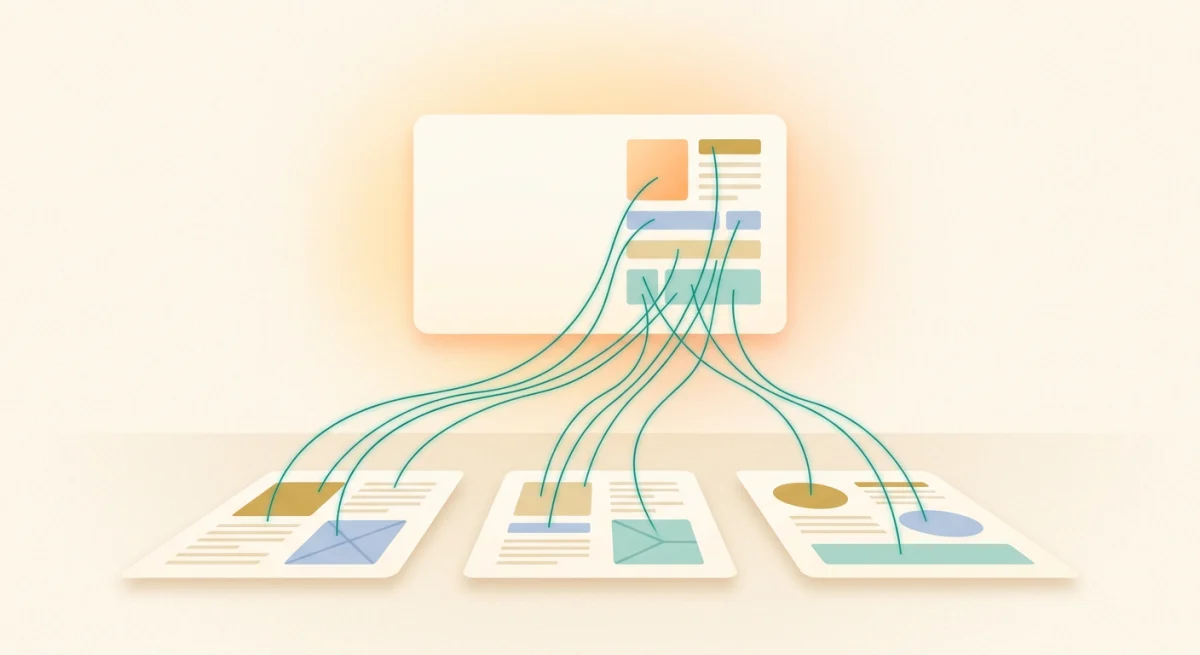
A habit survives only if it is nearly free. If checking a claim means searching for the document, finding the page, and scanning for the sentence, you will do it twice and then never again. The design answer is to work in tools where every claim is one click from its passage.
That is the principle Tatsulok is built on: answers assembled from your own documents, each sentence linked to the exact passage behind it, and an honest "your sources do not contain this" when the evidence runs out. Inside a tool like that, the 90-second check costs seconds. But the ritual itself belongs to you, not to any product. Practice it everywhere, and no AI tool gets to spend your credibility for you.
Try it today, no signup needed: take the last AI answer you almost forwarded, and run the three steps. Open the source. Compare the claim to the passage. Say out loud what the passage does not prove. Time yourself. It will be under two minutes, and you will know something you did not know before.
FAQ
- How do I verify an AI answer quickly?
- Use the 90-second ritual: open the cited source itself, compare the AI's claim against the actual passage, and note what the passage does not prove. If there is no source to open, treat the claim as unverified.
- Why is checking the passage better than trusting the citation?
- Because most citation errors involve real sources used wrongly, not fake ones. Columbia's Tow Center audit found even the best assistant cited sources incorrectly 37% of the time. A link that resolves proves the source exists, not that it supports the claim.
- What if the AI cannot show a source at all?
- Then you have a claim you cannot verify, which is worth knowing before you forward it. Either ask the tool to answer only from sources it can show, move the question to a tool grounded in your own documents, or pass the claim along clearly labeled as unverified.
- Does this work for any AI tool?
- Yes. The ritual is tool-independent: source, comparison, limits. Tools differ only in how expensive each step is. Citation-first tools make it a one-click habit; tools without sources make step one a research project.
- Is 90 seconds really enough?
- For a single consequential claim, usually yes, provided the tool links the claim to its passage. What takes hours is verifying an answer with no anchors at all, which is exactly why the tool choice determines whether the habit survives.
Sources
Related guides
How AI engines cite
Princeton researchers measured what makes AI engines cite a source: citations, statistics, and quotations boosted visibility up to 40%. What that means for trusting AI answers, and for being cited yourself.
Read the article
AI checking AI
Asking one AI to verify another feels rigorous, but research measured a 64.5% self-correction blind spot and shared failure modes. What independent verification actually requires, in plain language.
Read the article
When AI says I don't know
An AI that admits the evidence is not there is protecting you, not failing you. How to tell an honest gap from a broken refusal, and how to turn "insufficient information" into a better question.
Read the article