Source laundering: how weak sources come out of AI looking strong
Source laundering is what happens when an AI answer absorbs a weak source and restates it in the same confident, polished prose it uses for strong ones. The content farm and the peer-reviewed study come out sounding identical, and the reader inherits the weakness without seeing it. The undo is a three-question check on the source itself: who wrote it, on what evidence, with what incentive. This post teaches where laundering happens and how to make the check a reflex.
Updated
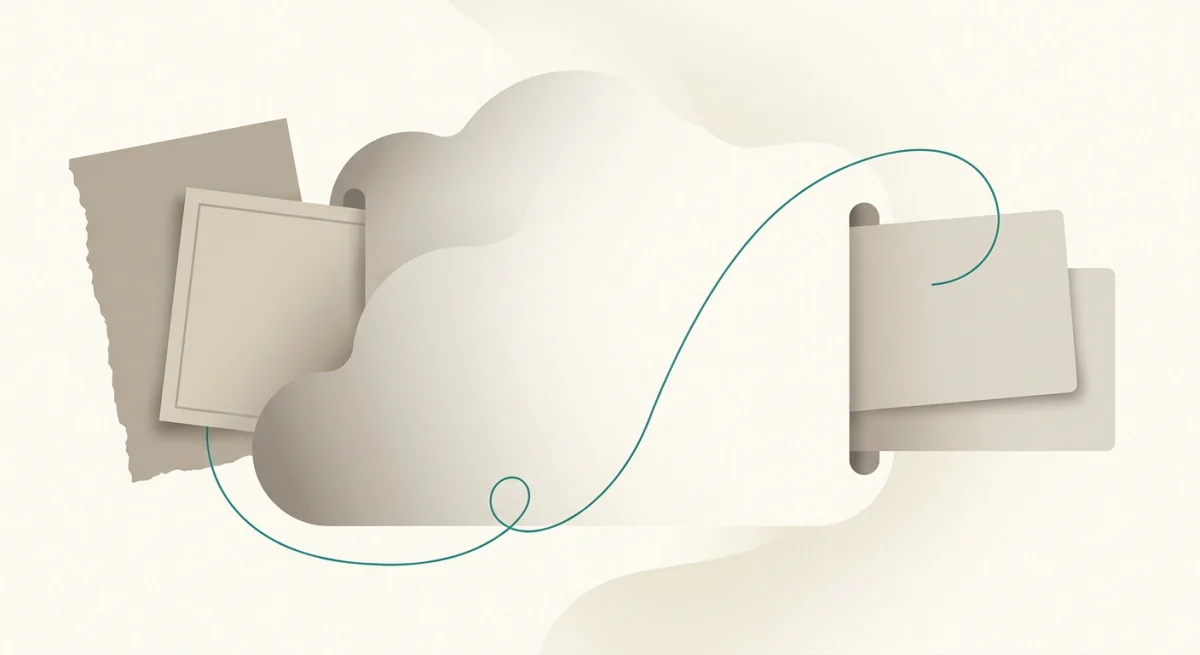
Two sources, one voice
Ask an AI about a health claim, a market size, or a legal rule, and the answer arrives in one seamless voice. Behind sentence two sits a methodical government dataset. Behind sentence four sits a page written to rank, by no one in particular, sourced from nothing checkable. In the answer, both sentences sound exactly the same.
That flattening is the laundering. On the open web, a junk page at least looks like a junk page: the ads, the padding, the anonymous byline all warn you. Inside an AI answer, those signals are stripped and the content is rewritten in the assistant's calm, authoritative register. The weakness survives; only the warning labels are gone.
Why the machine cannot do this check for you
Retrieval systems rank sources by relevance and extractability, not by epistemic quality. A page that answers the query directly, in clean structure, with quotable sentences, gets pulled, and content farms have optimized for exactly that shape. Columbia's Tow Center measured the downstream result: AI search engines misattributed or fabricated sourcing on more than 60% of test queries, with even the best engine wrong 37% of the time.
Judging whether a source deserves belief requires knowing who stands behind it, what evidence it rests on, and what it was written to achieve. Those are questions about the world, not about the text, and the pipeline never asks them. Sentence-level citations tell you where a claim came from; they cannot tell you whether where it came from is any good.
The three-question source check
The check that undoes laundering takes about thirty seconds per source, and it asks the questions the machine skipped.
Who wrote it? A named expert, an institution with a reputation to lose, or nobody findable. Anonymity is not disqualifying, but it removes the accountability that lets you borrow confidence.
On what evidence? Primary data, named studies, and linked documents, or just assertions with the grammar of evidence. Follow one citation deep: pages that cite pages that cite nothing are a genre.
With what incentive? Written to inform, to rank, or to sell. Incentive does not automatically falsify, but it tells you where the author stopped checking.
Where to spend the check, and where to skip it
Thirty seconds per source is cheap, but not free, so spend it where laundering costs the most: claims you will repeat, numbers that drive decisions, and anything that surprised you. Surprise is the highest-value trigger, because a surprising claim from a weak source is the single most viral form of laundered content.
Skip the check for the free tier of your work, the same boundary the team verification flow draws. And notice the compounding trick: sources you have checked once, your own library of vetted documents and trusted references, do not need re-checking every time. That is the quiet argument for doing serious work over a curated corpus instead of the open web: the source-quality check gets done once, upstream, instead of per-answer, forever.
Curation is the check, done once
This is exactly why Tatsulok is built around libraries rather than open-web retrieval. Your own documents are sources you already stand behind. Because you vetted the library once, at the moment you added each document, every answer inherits that provenance instead of laundering it. Each claim still links to its exact passage, and gaps are stated honestly, so both layers of the check, the passage and the source, are one click deep.
This week's drill, no signup needed: take one AI answer with sources and run the three questions on each source it cites. Score them: how many were written by someone findable, on evidence you can follow, to inform rather than to rank? That score, more than the answer's fluency, is what the answer was worth.
FAQ
- What is source laundering in AI answers?
- The flattening effect where an AI restates weak and strong sources in the same confident prose, stripping the visual and contextual warning signs a junk page carries on the open web. The weakness survives; the warning labels are removed.
- Why do AI tools cite low-quality sources?
- Retrieval ranks by relevance and extractability, which content farms optimize for, not by epistemic quality. The Tow Center measured AI search engines misattributing or fabricating sourcing on more than 60% of test queries.
- How do I evaluate a source an AI cited?
- Three questions, thirty seconds: who wrote it (findable author or institution), on what evidence (primary data and followable citations), with what incentive (to inform, rank, or sell). Spend the check on claims you will repeat and anything that surprised you.
- Is a citation to a real page enough to trust a claim?
- No. A resolving link proves existence, the passage check proves support, and the source check proves the origin deserves belief. Laundering specifically survives the first test and often the second; only the third exposes it.
- How does using a curated corpus prevent source laundering?
- Curation performs the source-quality check once, upstream, for the whole corpus, so every answer inherits vetted provenance. In Tatsulok, answers come only from your documents, with each claim linked to its exact passage.
Sources
Related guides
Japan AI search habits
In a 2026 five-country survey, 36.7% of Japanese respondents scroll past the AI Overview to pick sources themselves, the highest rate measured. The same data shows the lowest AI adoption. What both numbers mean.
Read the article
Context rot
Context rot is the accuracy drop language models suffer as input grows, long before the window fills. At 32,000 tokens, 11 of 13 models scored under half.
Read the article
Free Legal Resources
Find free Philippine legal research sources for laws, cases, court rules, bills, and agency issuances, with clear guidance on authority and verification.
Read the article