The best NotebookLM alternative for private, cited answers over your documents
The best NotebookLM alternative grounds answers in your own documents, cites answers to the exact source passage you can open and verify, keeps your files private (encrypted, and kept out of model training), and works across all your real work rather than a single notebook. NotebookLM popularized source-grounded AI; if you want that same grounding with stronger privacy guarantees, verifiable citations, and your whole library in one place, Tatsulok is built for exactly that. Below is what to look for in an alternative, and an honest comparison.
Updated
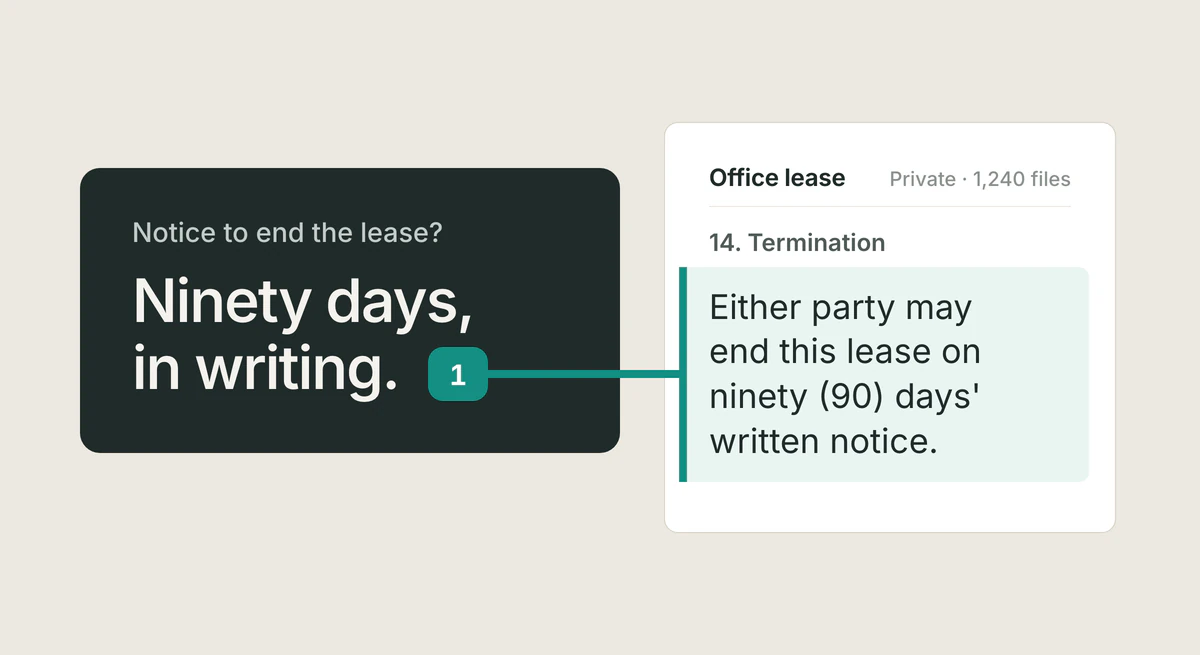
What is NotebookLM, and why look for an alternative?
NotebookLM is Google's AI research tool that grounds its answers in the sources you upload and links claims back to those sources, so you can check where an answer came from. It made source-grounded AI mainstream, and for many quick research tasks it works well.
People look for an alternative when they need more than a notebook: stronger privacy and data-control guarantees for sensitive files, citations they can verify down to the exact passage, the same assistant across their whole library and every device rather than per-notebook, or team sharing with real access control. If any of those matter to your work, it is worth comparing options on those axes rather than on brand.
What to look for in a NotebookLM alternative
Judge any alternative on four things that decide whether you can trust it and actually use it:
• Privacy and data control: are your documents encrypted, kept private by default, and kept out of model training? For sensitive material, look for explicit zero data retention with the model providers. • Verifiable citations: does the answer link to the exact source passage, with a preview you can read and a link to the original file, not just a vague reference to a whole document? • Fits your real work: can you ask across your whole library, instead of copying files into isolated notebooks? • Sharing and access control: can you share answers and sources with teammates under permissions, so the right people see the right things?
These four, not the logo, are what separate a tool you can rely on from one you have to double-check.
How Tatsulok compares
Tatsulok is built around grounding and verifiability. Answers about your files are drawn from the documents you provide and cited to the exact source passage, with a highlighted preview and a direct link to the original file, so confirming an answer takes a glance. That matters because general AI models predict plausible text rather than retrieve facts, and even purpose-built tools get it wrong: a Stanford study found leading AI legal-research tools still hallucinated between 17% and 34% of the time. A citation you can open is what turns a confident answer into a trustworthy one.
On privacy, your files are encrypted at rest and private by default, and the model providers that answer your questions commit to no training and to keeping none of your content afterwards. And instead of isolated notebooks, Tatsulok works across your whole library, with sharing and access control for teams. If NotebookLM got you used to source-grounded answers and you now want stronger privacy, verifiable citations, and continuity across your work, that is the gap Tatsulok fills.
Is your data private with an AI document tool?
It depends entirely on the tool's data policy, so check it before uploading anything sensitive. The properties that matter are encryption at rest and in transit, a clear promise that your content is kept out of model training, and zero data retention with the underlying model providers, so your documents are not stored or reused downstream.
Tatsulok is private by default on all three: your files are encrypted at rest, every chat request goes only to model providers under zero data retention, and you control who can access what. That is what makes it safe to point an AI assistant at confidential documents, which is often the deciding factor when choosing a NotebookLM alternative for real work.
FAQ
- What is the best NotebookLM alternative?
- The best alternative grounds answers in your own documents, cites answers to the exact source you can verify, keeps your files private (encrypted, and kept out of model training), and works across your whole library on every device. Tatsulok is built for exactly that.
- Why look for a NotebookLM alternative?
- Common reasons are stronger privacy and data control for sensitive files, citations you can verify down to the exact passage, using one assistant across your whole library and all devices instead of per-notebook, and team sharing with access control.
- Does Tatsulok cite its sources like NotebookLM?
- Yes, and it goes further: answers link to the exact source passage with a highlighted preview and a direct link to the original file, so you can confirm each answer at a glance rather than re-reading a whole document.
- Is my data used to train the AI?
- No. With Tatsulok, your workspace is never sent to training datasets, your files are encrypted at rest, and every chat request goes only to model providers under zero data retention. You control access and can delete content anytime.
- Can I use it across devices and with my team?
- Yes. Tatsulok runs in your browser, on a computer or a phone, works across your whole library, and lets you share answers and sources with teammates under access control, instead of keeping everything in isolated single-user notebooks.
Sources
Related guides
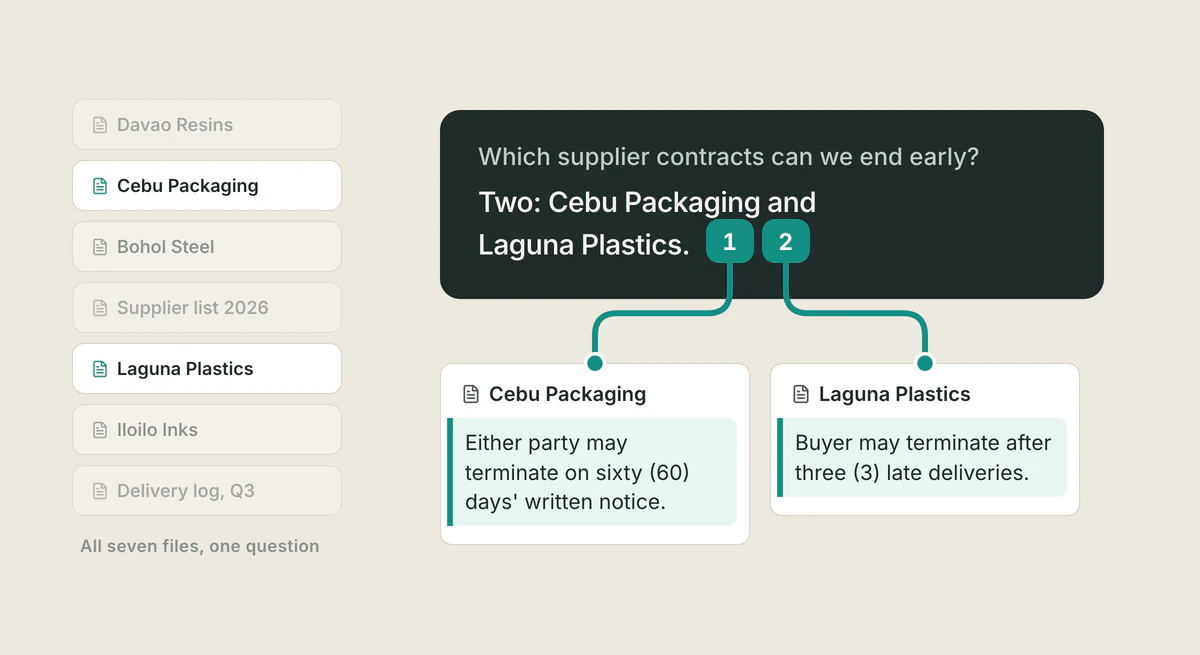
ChatPDF alternative
Outgrowing ChatPDF's 2-PDF daily cap and 120-page limit? Compare alternatives for chatting with documents, and what changes when every answer cites its exact passage.
Read the article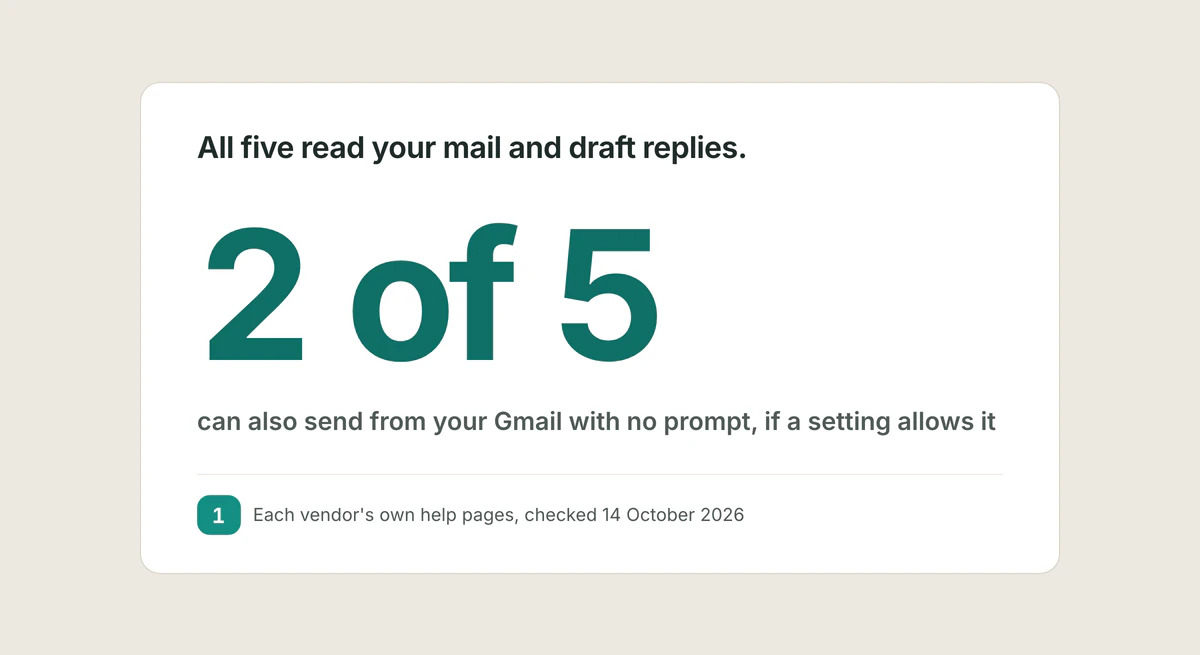
Gmail assistants compared
Checked 18 November 2026 against each vendor's own pages: which assistants read, draft and send from Gmail, what approval each asks for, and where Tatsulok falls short.
Read the article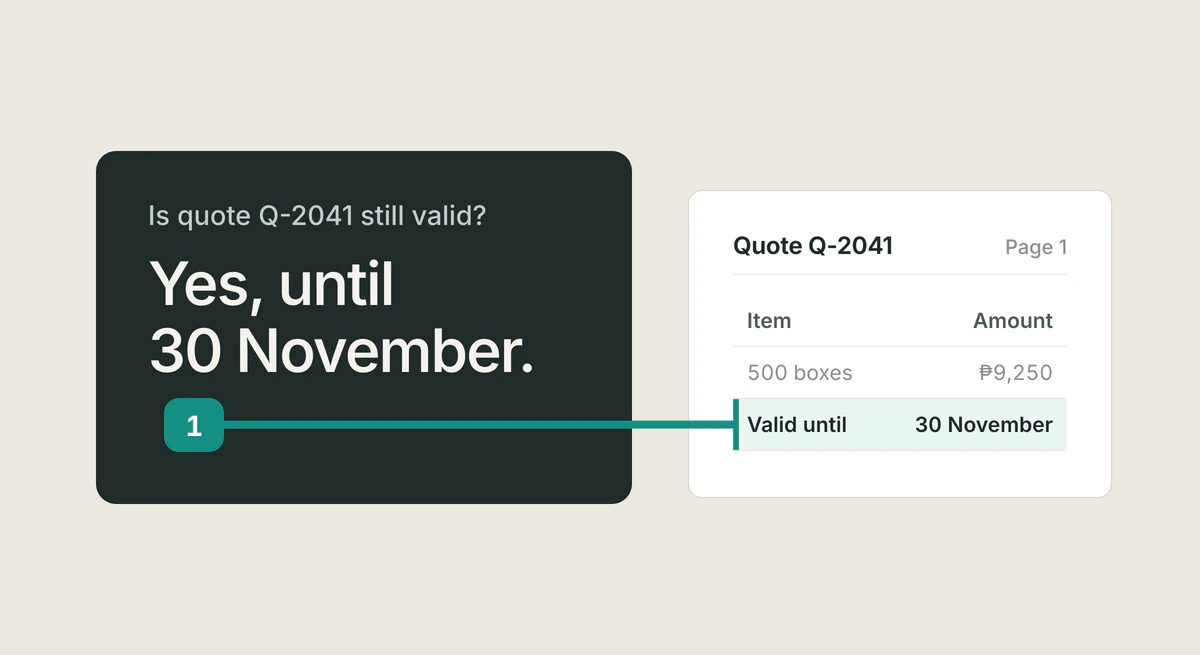
Superhuman, Shortwave or Gemini
Superhuman and Shortwave are new inbox apps; Gemini helps inside Gmail. What each does, whether it sends, and what it costs (checked 14 October 2026), and how to check a reply that rests on a document.
Read the article