How to Use AI for Philippine Legal Research
AI legal research uses language models to find, summarize, and compare legal materials. Prevent hallucinated citations by opening every cited case, law, rule, or issuance in its official source and checking the quoted text yourself. A cited tool like Tatsulok helps by linking each answer to the exact provision supporting it.
Updated
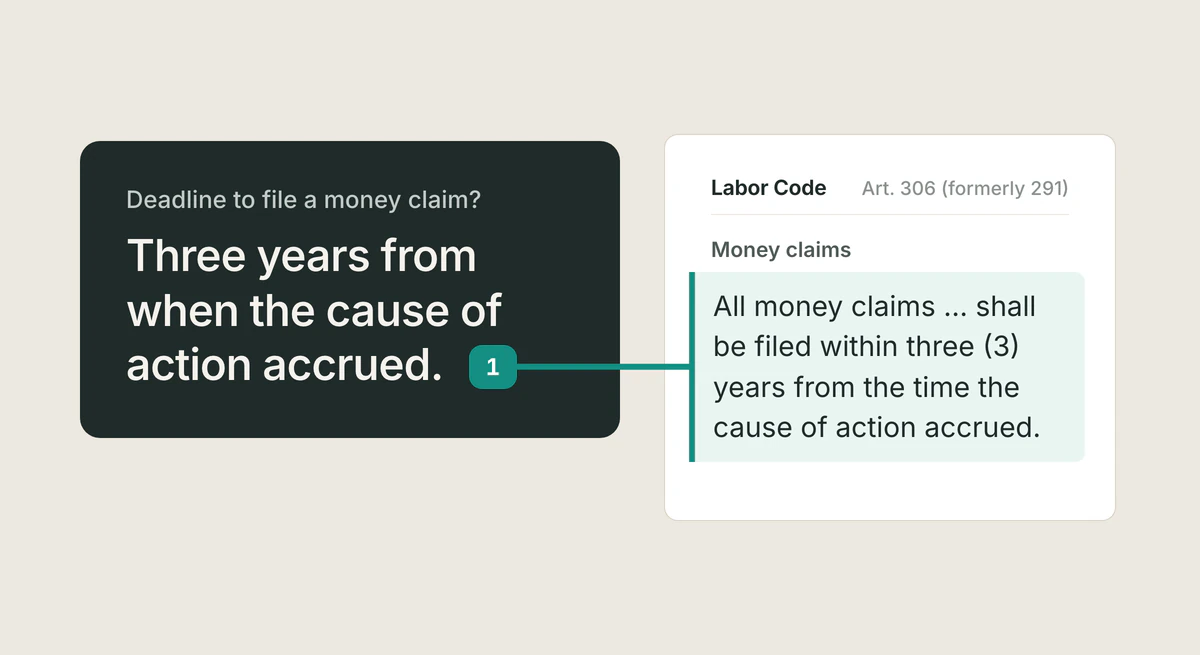
Treat AI as a research assistant, not an authority
Use AI to identify search terms, frame issues, summarize documents, and locate possible authorities. Treat every result as a lead until the cited text has been confirmed in an official source. The controlling authority remains the Constitution, statute, rule, decision, or valid agency issuance.
Watch for hallucinated Philippine citations
AI can invent case titles, docket numbers, dates, quotations, or statutory sections that look credible. It can also cite a real document for a proposition the document does not support. A polished answer is not evidence that the citation is accurate.
Verify against authoritative Philippine sources
Check statutes, executive issuances, and other official publications through the Official Gazette at officialgazette.gov.ph. Check Supreme Court decisions, resolutions, and rules through the Supreme Court E-Library. For administrative rules, circulars, and memoranda, confirm the text on the website of the issuing agency.
Prompt for traceable results
State the Philippine legal issue, relevant facts, jurisdiction, and research cutoff date. Ask for separate lists of primary authorities and secondary explanations, with document titles, dates, identifiers, exact quotations, and official URLs. Instruct the AI to mark uncertain points instead of completing missing citations.
Verify each citation step by step
Open the official URL and confirm that the document title, date, and identifier match the AI output. Search the page for a distinctive phrase from the quotation, then read the surrounding provision or discussion for context. Check amendments, repeals, later rulings, and the effectivity date before relying on the authority.
Check whether the source supports the proposition
A citation can be real but irrelevant. Compare the AI's legal proposition with the exact language of the provision or ruling, including qualifications, exceptions, and procedural posture. Record whether the source states the rule directly, applies it to facts, or merely mentions it.
Why citations matter in legal work
Legal analysis must allow a reader to inspect the authority, evaluate context, and reproduce the research. Exact citations distinguish binding primary authority from commentary and unsupported synthesis. They also make errors easier to detect before a memorandum, pleading, or class submission is finalized.
How Tatsulok supports verification
Tatsulok answers with a citation to the exact provision supporting the response, so the source can be opened and checked directly. Read the cited passage in context and compare it with the answer before relying on it. The citation shortens the path to verification but does not replace legal judgment.
FAQ
- Can I trust AI to cite Philippine cases and statutes?
- Only after you check each citation against an official source. AI can invent docket numbers, section numbers, dates, and quotations that read as credible, so treat every cited authority as a lead until you confirm the text yourself.
- Where can I verify a Philippine statute or executive issuance online?
- Check the Official Gazette at officialgazette.gov.ph, and confirm administrative rules, circulars, and memoranda on the website of the issuing agency.
- Where can I check a Supreme Court decision or rule?
- Use the Supreme Court E-Library, which publishes decisions, resolutions, and the rules of court. Match the title, date, and docket or identifier against the AI output before relying on it.
- How do I know if a law is still in force?
- Read the provision in an official source and check for later amendments, repeals, or rulings and the effectivity date. A citation being real does not mean the provision is current or that it supports the point being made.
Sources
Related guides
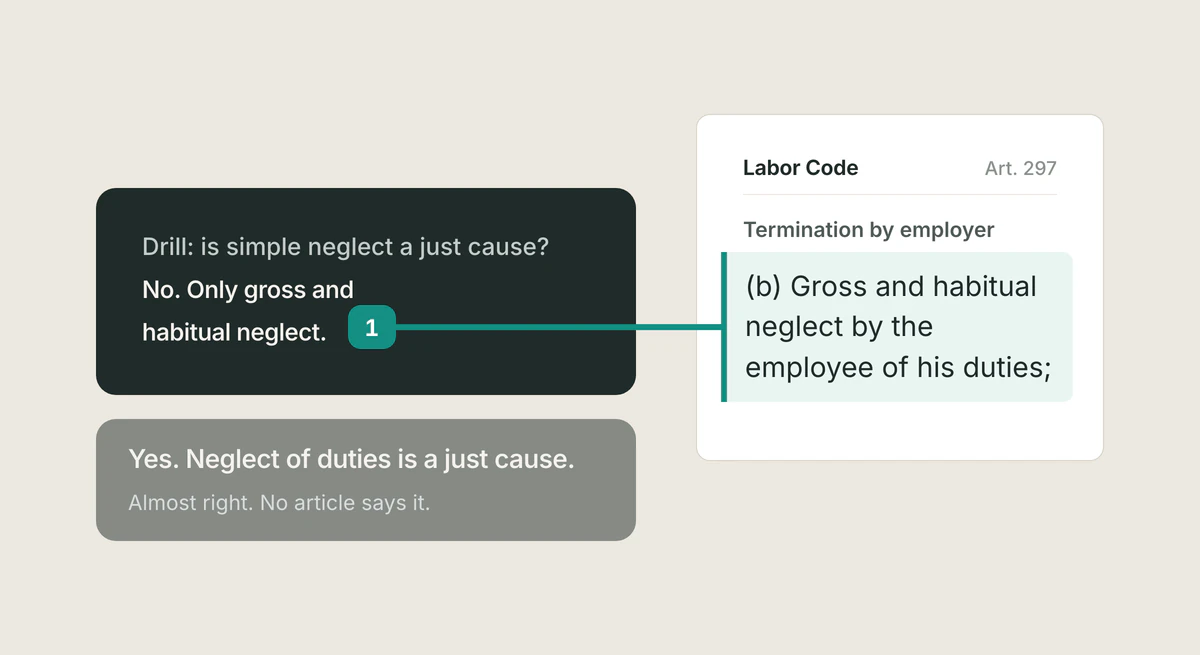
AI for bar exam study
48.98% passed the 2025 Philippine Bar. AI can genuinely help you join them, if you use it as a drill partner grounded in real law instead of a summary machine you cannot check.
Read the article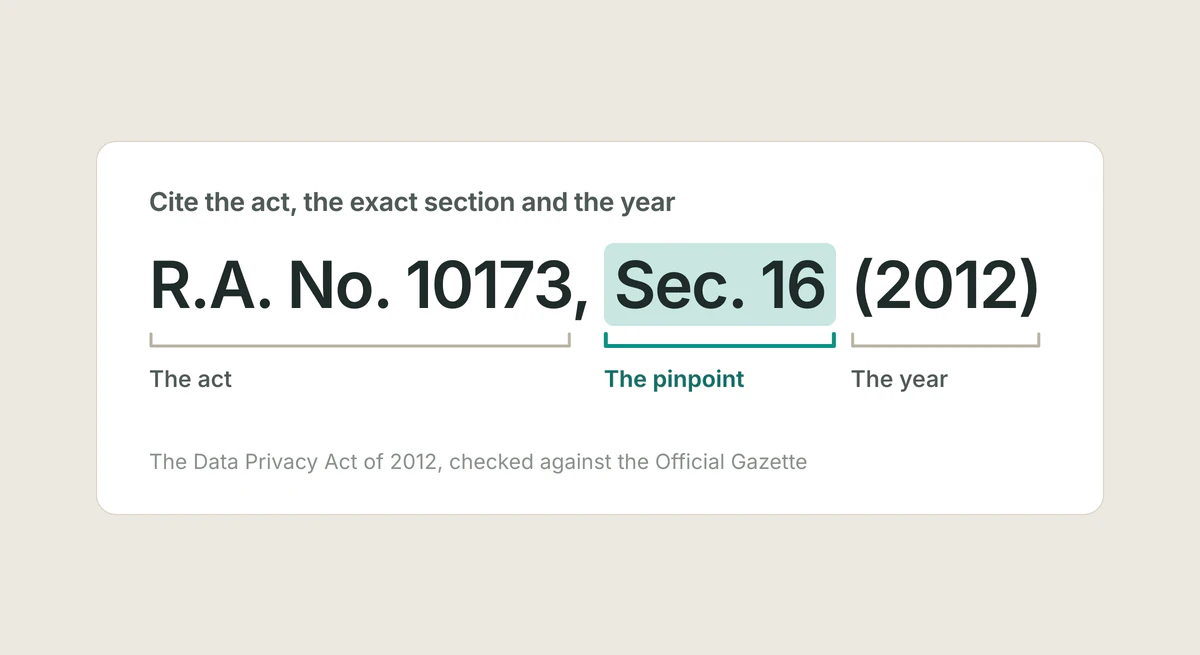
Legal Citation
To cite Philippine statutes, cases, the Constitution, and rules, give exact identifiers, dates, and pinpoints, then verify each against an official source.
Read the article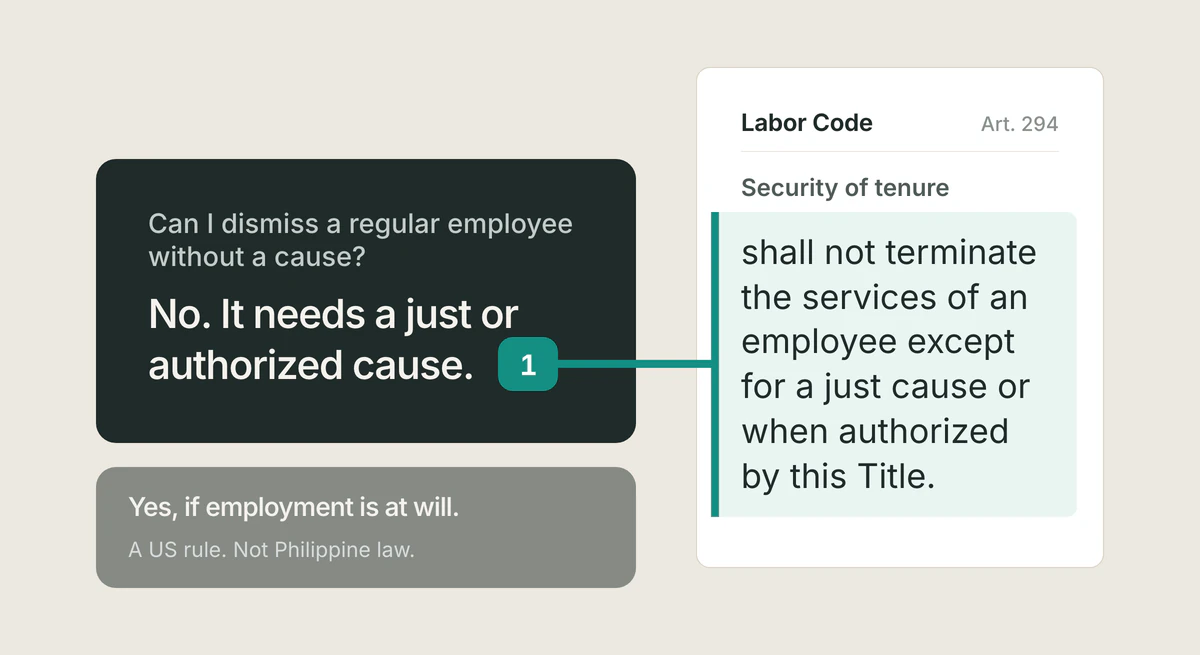
AI legal research tools
General chatbots hallucinate on 43% of legal queries and US legal AI barely covers Philippine law. What actually works for PH legal research, from the SC E-Library to grounded AI.
Read the article