Where to Read Philippine Law Online for Free
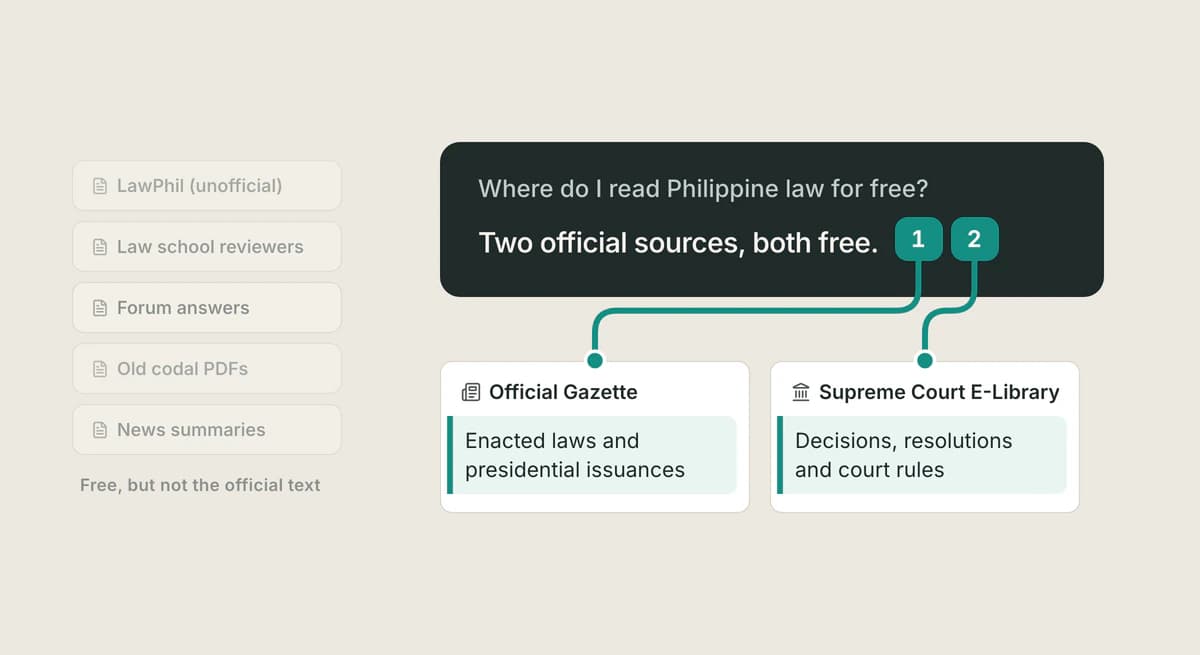
Start with the Official Gazette for enacted laws and presidential issuances, and the Supreme Court E-Library for decisions, resolutions, and court rules. Use LawPhil as a convenient unofficial index, then verify important text against an official source. For bills, legislative records, and agency regulations, search the relevant chamber or issuing agency website.
Updated
Official Gazette
The Official Gazette publishes Republic Acts, executive orders, proclamations, and other presidential issuances. It is an official source for the texts it publishes. Search by document type, number, title, or date, then check whether later laws or issuances amended or repealed the document.
Supreme Court E-Library
The Supreme Court E-Library contains decisions, resolutions, Rules of Court, and other judicial materials. It is the judiciary's official online research source. Search by case title, docket number, date, topic, or legal phrase, and read the full ruling rather than relying only on summaries.
LawPhil Project
The LawPhil Project of the Arellano Law Foundation provides a widely used free compilation of statutes, cases, executive issuances, and legal materials. It is convenient for browsing and full-text research, but it is not an official government publication. Verify quotations, dates, and current wording against the Official Gazette, Supreme Court E-Library, or relevant agency.
Senate of the Philippines
The Senate website provides bills, resolutions, committee materials, journals, and information on Republic Acts. It is authoritative for Senate legislative records published there. Search by bill number, Congress, author, subject, or status, and remember that a filed or approved bill is not law unless it completes the legislative process and takes effect.
House of Representatives
The House of Representatives website provides House bills, resolutions, committee information, and other legislative documents. It is authoritative for House records published there. Use the bill number, Congress, author, committee, or subject to trace a proposal and compare its versions during the legislative process.
Issuing Agency Websites
Government departments, commissions, and regulators publish implementing rules and regulations, circulars, memorandum orders, and advisories on their own websites. The issuing agency is generally the best source for confirming the official text and later amendments of its issuance. Search the agency's issuances or publications section using the document number, year, and title.
How to Verify That a Source Is Current
Distinguish official government sources from convenient unofficial compilations, and use unofficial mirrors primarily for discovery. Confirm the document number, title, issuing body, publication date, effectivity clause, amendments, repeals, and later cases interpreting it. For work affecting rights or deadlines, compare the text across the relevant official sources.
FAQ
- Where can I read Philippine laws online for free?
- Use the Official Gazette for official texts of Republic Acts and presidential issuances. LawPhil is useful for finding materials quickly, but important text should be checked against an official government source.
- Where can I find Philippine Supreme Court decisions?
- Search the Supreme Court E-Library by case title, docket number, decision date, topic, or phrase. It is the judiciary's official online collection of decisions, resolutions, and court rules.
- Is LawPhil an official legal source?
- No. LawPhil is a reputable and widely used project of the Arellano Law Foundation, but it is not an official government publication. Verify critical quotations and current provisions using the relevant official source.
- Where can I track Philippine bills before they become laws?
- Use the Senate and House of Representatives websites to find bills, resolutions, committee records, and legislative status information. Check both chambers when tracing related versions, and do not treat a bill as law until it has been enacted and has taken effect.
- How do I know whether a Philippine law or regulation is still effective?
- Check for later amendments, repealing clauses, effectivity provisions, agency updates, and Supreme Court rulings affecting the text. Confirm regulations on the issuing agency's website and compare unofficial copies with official publications.
Sources
Related guides
AI for bar exam study
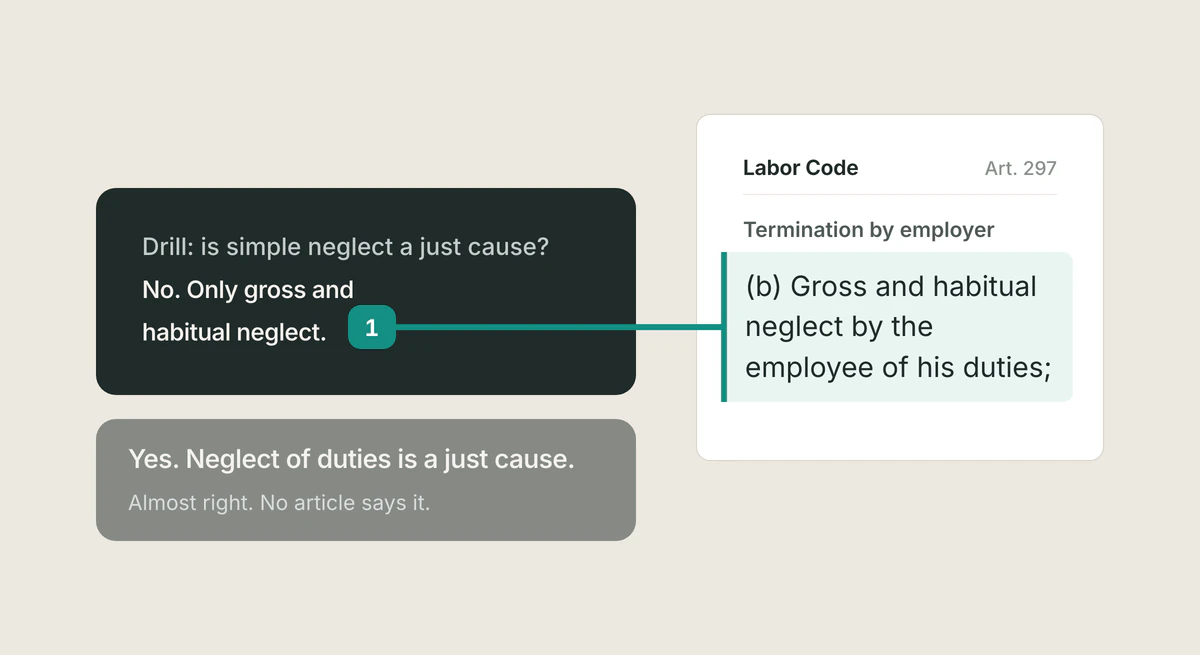
48.98% passed the 2025 Philippine Bar. AI can genuinely help you join them, if you use it as a drill partner grounded in real law instead of a summary machine you cannot check.
Read the article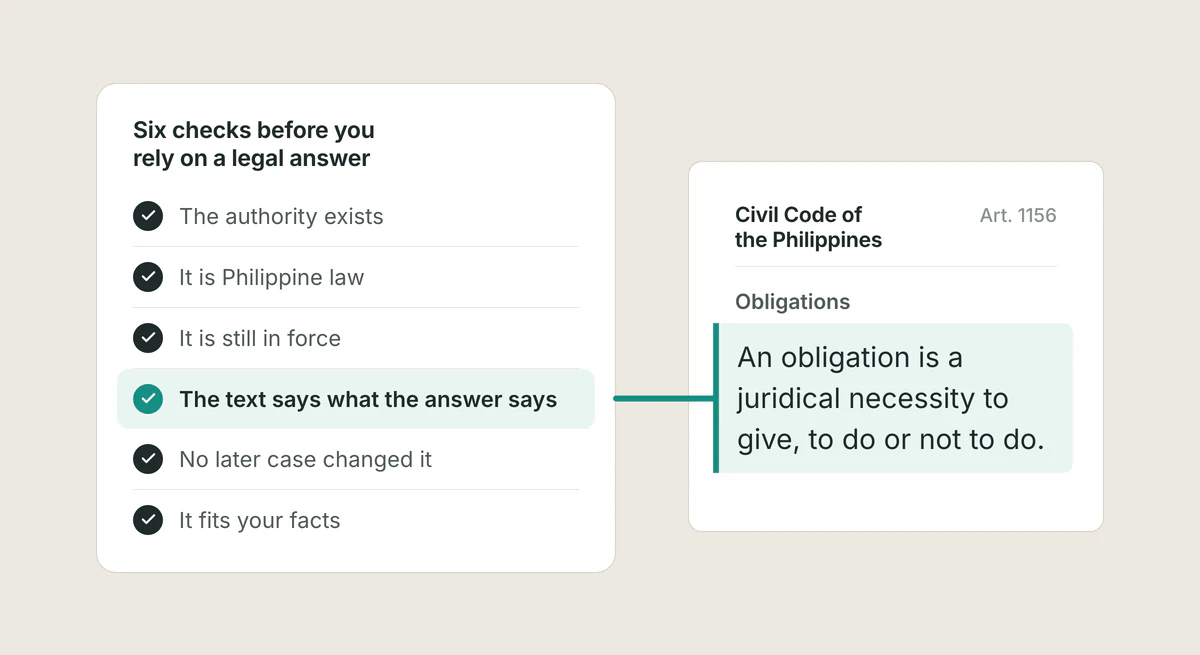
Verify PH legal AI answers
The six-point check for any AI claim about Philippine law: existence, jurisdiction, currency, the actual text, later treatment, and factual fit. With the free sources to check against.
Read the article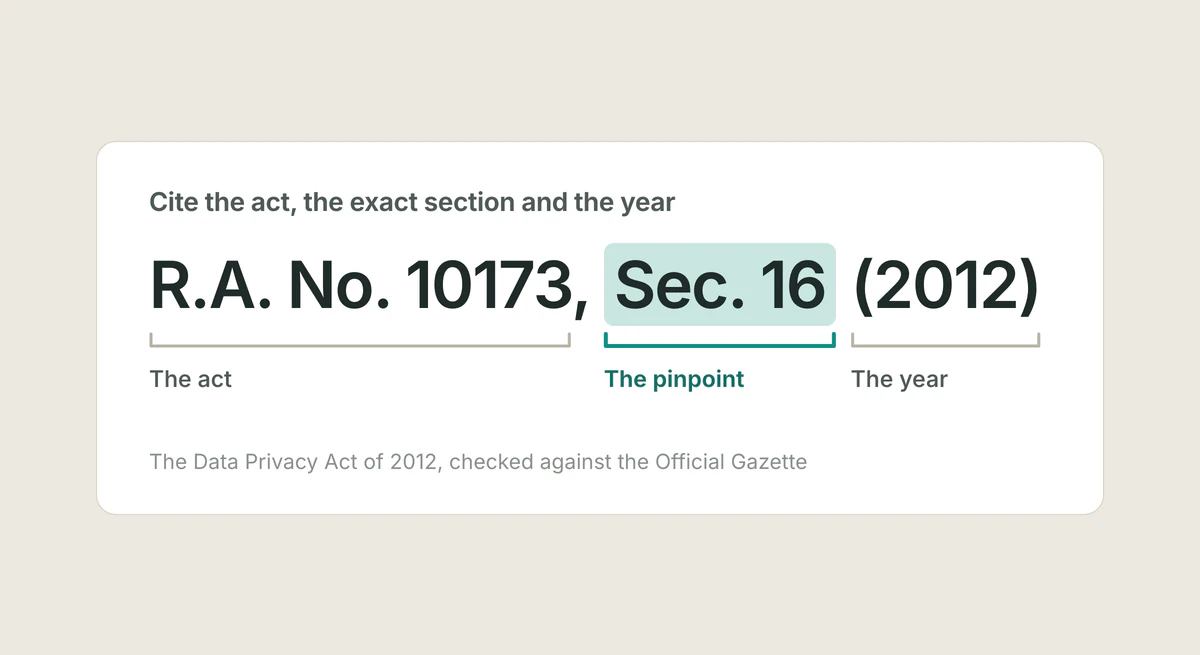
Legal Citation
To cite Philippine statutes, cases, the Constitution, and rules, give exact identifiers, dates, and pinpoints, then verify each against an official source.
Read the article