The best AI tools with citations, honestly compared
"AI with citations" sounds like one category, but the tools people mean are not substitutes, they cite different things. Some cite published science, one cites the open web, and some cite only the private documents you upload. The right question isn't "which is best" but "which corpus do I need cited?" This guide compares six tools by exactly that, so you can pick the one that fits your work, even if that isn't ours.
Updated
What "AI with citations" actually means
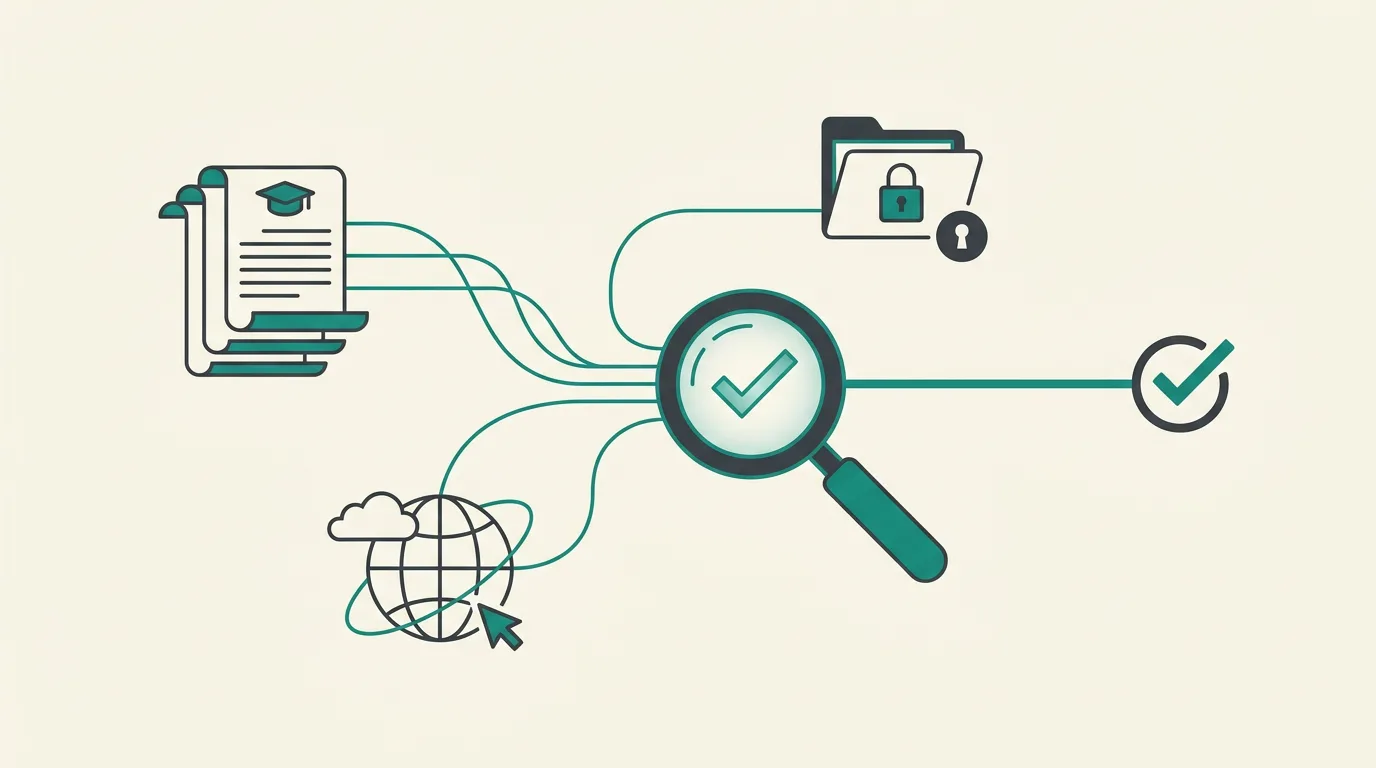
A citation is only as useful as the source behind it, so the first thing to check is what a tool is allowed to cite. Three groups emerge. Scholarly-literature engines (Scite, Elicit, Consensus) cite peer-reviewed papers you don't already have. A web-answer engine (Perplexity) cites live public web pages. Your-own-documents engines (NotebookLM, Tatsulok) cite only the files you upload. A litigator checking a contract clause and a PhD student running a systematic review both want "citations," but they need completely different corpora, so match the tool to the corpus, not to the marketing.
1. Scite: is this study actually reliable?
Scite's standout feature is Smart Citations: instead of just counting how often a paper is cited, it classifies each citation as supporting, contrasting, or mentioning, and shows the exact citing sentence. That tells you whether later research confirmed or disputed a finding, something a raw citation count can't. It reasons only over published academic literature (on the order of a billion-plus citation statements), so it can't touch the open web or your private files, and the support/contrast labels are an automated inference worth spot-checking. Best when you need to judge how a scientific claim has held up.
2. Elicit: automate a literature review
Elicit is built for the mechanical work of a literature review: search across roughly 138 million papers, extract findings into a structured table with one row per paper, and summarize, with every claim traceable to its source and an extracted supporting quote. It's scholarly-only, so it's not for the web or your own documents, and its deepest extraction workflows sit behind paid tiers. Best when you're synthesizing many papers and want the evidence laid out in a table you can verify row by row.
3. Consensus: what does the research say?
Consensus answers empirical "what does the research say about X" questions by aggregating across 200 million-plus peer-reviewed papers, including a meter showing how much of the literature agrees. Of the three scholarly engines it has the most usable free tier. It's optimized for research questions, so it's weak on non-empirical topics and, like any aggregator, can flatten nuance in genuinely contested fields. Best for a fast, evidence-backed verdict on a scientific question.
4. Perplexity: cited answers from the open web
Perplexity is effectively a search engine that writes the answer for you and footnotes it, drawing on real-time web results with numbered citations to the pages it used. That makes it excellent for current, general questions, but the answer is only as trustworthy as the pages retrieved, the sources are public pages of varying quality, and it isn't designed to be grounded strictly in your private documents or in vetted peer-reviewed literature. Best for a fast, current answer you can trace back to its web sources.
5. NotebookLM: a free notebook over your own files
Google's NotebookLM turns a set of documents you upload into a personal, source-grounded notebook: it answers only from your sources and cites back into them, so it rarely fabricates. It's free with a Google account and a strong fit for personal and study use. The trade-offs are per-source and per-notebook caps (and daily chat limits on the free tier) plus a consumer posture, lighter on private-document governance, access control, and professional-workspace integration. Best as a free personal notebook over material you've gathered.
6. Tatsulok: cited answers from your private documents
Tatsulok is the your-own-documents option built for professional work, where an answer has to be traceable to the exact passage in a document you own, contract analysis, due diligence, regulatory or literature review. You upload files into a private library, ask in plain language, and each answer carries an inline citation to the specific source passage you can open and verify; when it can't find support it says so instead of guessing. It's private by default with a stated zero-retention posture, and works alongside Word and the desktop. Like any documents tool it only knows what you give it, it's not a discovery engine for papers you don't have, nor a web answer engine. There's a free tier to try it on your own files.
How to choose: match the tool to what you need cited
Need to know if a study holds up? Scite. Running a systematic review with data extraction? Elicit. Want a quick "what does the research say" verdict? Consensus. A general or current-events answer from the web? Perplexity. A free personal notebook over files you uploaded? NotebookLM. Professional answers that must trace to the exact passage in your own private documents, with a private-library and zero-retention posture? Tatsulok. These tools don't really compete, they cite different things. Decide what you need cited, and the right tool picks itself.
FAQ
- What is the best AI tool that provides citations?
- There's no single best one, because they cite different corpora. For published science, Scite, Elicit, or Consensus; for a cited answer from the open web, Perplexity; for answers grounded in your own uploaded documents, NotebookLM or Tatsulok. Choose by what you need cited rather than by an overall ranking.
- Which AI cites your own documents instead of the web or papers?
- NotebookLM and Tatsulok answer only from files you upload and cite back into them. NotebookLM is a free, consumer-friendly notebook; Tatsulok is built for professional work where each answer must trace to the exact source passage, with a private library and a zero-retention posture.
- Is there a free AI tool with citations?
- Yes. Consensus has the most usable free tier among the scholarly engines, Perplexity has a permanent free tier for web answers, NotebookLM is free with a Google account, and Tatsulok has a free tier for questioning your own documents. The paid tiers mostly raise limits or add depth.
- Do these AI citations mean the answer is always correct?
- No, a citation makes an answer checkable, not automatically true. Automated classification and extraction can be wrong, web pages vary in quality, and summaries can drift from the source. The value of citations is that you can open the source and verify in seconds, which is exactly why you should.
- What's the difference between Perplexity and NotebookLM for citations?
- Perplexity cites the live open web, so it's best for current, general questions. NotebookLM cites only the documents you upload, so it's best for grounded answers about your own material. They solve different problems: one searches the world, the other reasons over your files.
Sources
Related guides

AI mistakes at work
KPMG's global study found 57% of employees have made mistakes because of AI, and 58% rely on AI output without checking it. The two-habit fix that protects your work and your name.
Read the article
Verify AI answers
To verify an AI answer, demand a citation to the exact source passage and check the highlighted text against the original document. Here is how.
Read the article
The 90-second answer check
How to verify an AI answer in 90 seconds: open the source, compare the claim to the passage, and note what it does not prove. A ritual you can build into a habit, with a practice drill.
Read the article