What is AI slop, and how do you avoid it?
AI slop is digital content made with generative AI that is perceived as low-effort, low-quality, and produced in high volume. It is fluent enough to pass a glance but adds little real value, and at work it has a measurable cost. The antidote is not to avoid AI, it is to use it in a way that adds verifiable value: grounded in real sources, checked by a human, and cited so a reader can trust it. This article explains what slop is, what it costs, and how to stay on the right side of the line.
Updated
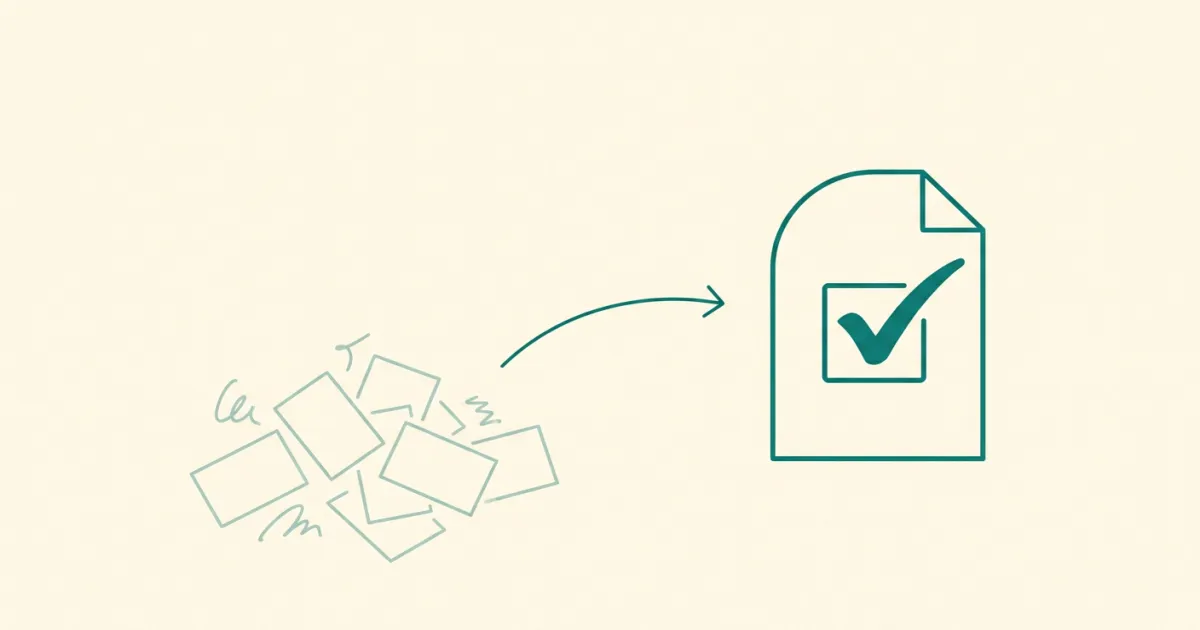
What is AI slop?
AI slop is generative-AI content, text, images, audio, or video, that is perceived as lacking effort, quality, or meaning, and is produced in high volume, often as clickbait. Researchers describe three recurring properties: it looks superficially competent, it took far less effort to make than it appears, and it can be mass-produced almost for free.
The term moved from internet forums into the mainstream in 2024, popularized in part by developer Simon Willison, and the flood became impossible to ignore. In 2025, "slop" was named Word of the Year by Merriam-Webster, defined as low-quality digital content produced in quantity by AI. The word stuck because everyone had started to recognize the thing it names.
Why is AI slop a problem at work? ("workslop")
Slop isn't only a social-media nuisance, it has moved into the workplace as "workslop": AI-generated reports, memos, and emails that look like real work but offload the actual thinking onto whoever receives them.
A 2025 Harvard Business Review study (conducted by Stanford researchers with BetterUp, surveying 1,150 U.S. desk workers) put numbers on the cost. Workers said they spent an average of one hour and 56 minutes dealing with a single instance of workslop. The researchers estimated an "invisible tax" of about $186 per month per affected worker, which scales to millions of dollars a year for a large organization. It also erodes trust: many recipients rated colleagues who sent workslop as less capable and less trustworthy than before. The lesson is that low-effort AI output doesn't save work, it moves the work downstream and adds a trust cost on top.
How do you avoid producing or consuming slop?
Slop is a use problem, not an AI problem. The same model can produce slop or genuine value depending on how you use it:
• Add real input: point the AI at real source material, your documents, data, and context, instead of asking it to invent from nothing. • Keep a human in the loop: review, edit, and take ownership of the output rather than forwarding a raw draft. • Make it verifiable: include citations so a reader can check the work instead of taking it on faith. • Optimize for the reader, not the word count: value is measured by what the recipient can trust and use, not by how much text you generated.
If the output saves the reader time and they can verify it, it is the opposite of slop.
The 2026 numbers: everyone searches with AI, few get the value
By 2026 the scale is measurable. Persol Research Institute's February 2026 survey estimates 18.4 million Japanese workers, 32.4% of the workforce, now use generative AI on the job, with usage concentrated in exactly the slop-prone tasks: looking things up and drafting text. The same survey found that only one user in four has actually reduced their working hours with it, and daily heavy users are just 11.7%.
That gap between adoption and value is the slop economy in miniature. Output is easy, so volume rises; verification is unpriced, so quality does not. The workers who get real value are the ones who close the loop: they treat AI output as a draft of evidence to check, not a finished answer to forward. The habit is the differentiator, and it is learnable.
How Tatsulok is built against slop
Tatsulok is designed around the properties that slop lacks: real sourcing, verifiability, and human ownership.
• Grounded in your sources: answers come from the documents you provide, not from generic training data, so the output carries real information rather than filler. • Cited by default: answers link back to the exact source passage, so a reader can verify them in seconds instead of trusting them blindly. • Built for collaboration, not auto-pilot: for work that is yours to own, Tatsulok is designed to propose changes you accept or reject, rather than silently flooding your document with unreviewed text.
The point isn't to generate more content, it's to produce answers a reader can trust. That is the difference between AI that adds value and AI that adds slop.
FAQ
- What does "AI slop" mean?
- AI slop is low-quality content generated by AI and produced in high volume, fluent enough to look fine at a glance but lacking real effort, quality, or meaning. "Slop" was named Merriam-Webster's 2025 Word of the Year for exactly this kind of mass-produced AI junk.
- What is "workslop"?
- Workslop is AI slop inside the workplace: reports, emails, and memos that look like finished work but push the real thinking onto the recipient. A 2025 Harvard Business Review study found workers spent almost two hours dealing with a single instance, an estimated $186-per-month hidden cost per affected worker.
- Is using AI the same as making slop?
- No. Slop comes from low-effort use, asking AI to invent content with no real input and forwarding it unchecked. The same tools produce genuine value when you ground them in real sources, keep a human in the loop, and make the output verifiable with citations.
- How do I make sure my AI output isn't slop?
- Give the AI real source material, review and own the result instead of forwarding a raw draft, and include citations so a reader can verify it. If the output saves the reader time and they can check it, it is the opposite of slop.
- How does Tatsulok avoid producing slop?
- Tatsulok answers from your own documents, links its answers back to the exact source passage, and is built to propose changes you accept or reject rather than auto-filling your work with unreviewed text. The goal is answers a reader can trust, not more content.
Sources
Related guides

AI mistakes at work
KPMG's global study found 57% of employees have made mistakes because of AI, and 58% rely on AI output without checking it. The two-habit fix that protects your work and your name.
Read the article
The 90-second answer check
How to verify an AI answer in 90 seconds: open the source, compare the claim to the passage, and note what it does not prove. A ritual you can build into a habit, with a practice drill.
Read the article
Verify AI answers
To verify an AI answer, demand a citation to the exact source passage and check the highlighted text against the original document. Here is how.
Read the article